Virtual exhibit
Integrity, Craftsmanship, Tradition: The History of the Seagram Plant in Waterloo
Integrity, Craftsmanship, Tradition: The History of the Seagram Plant in Waterloo
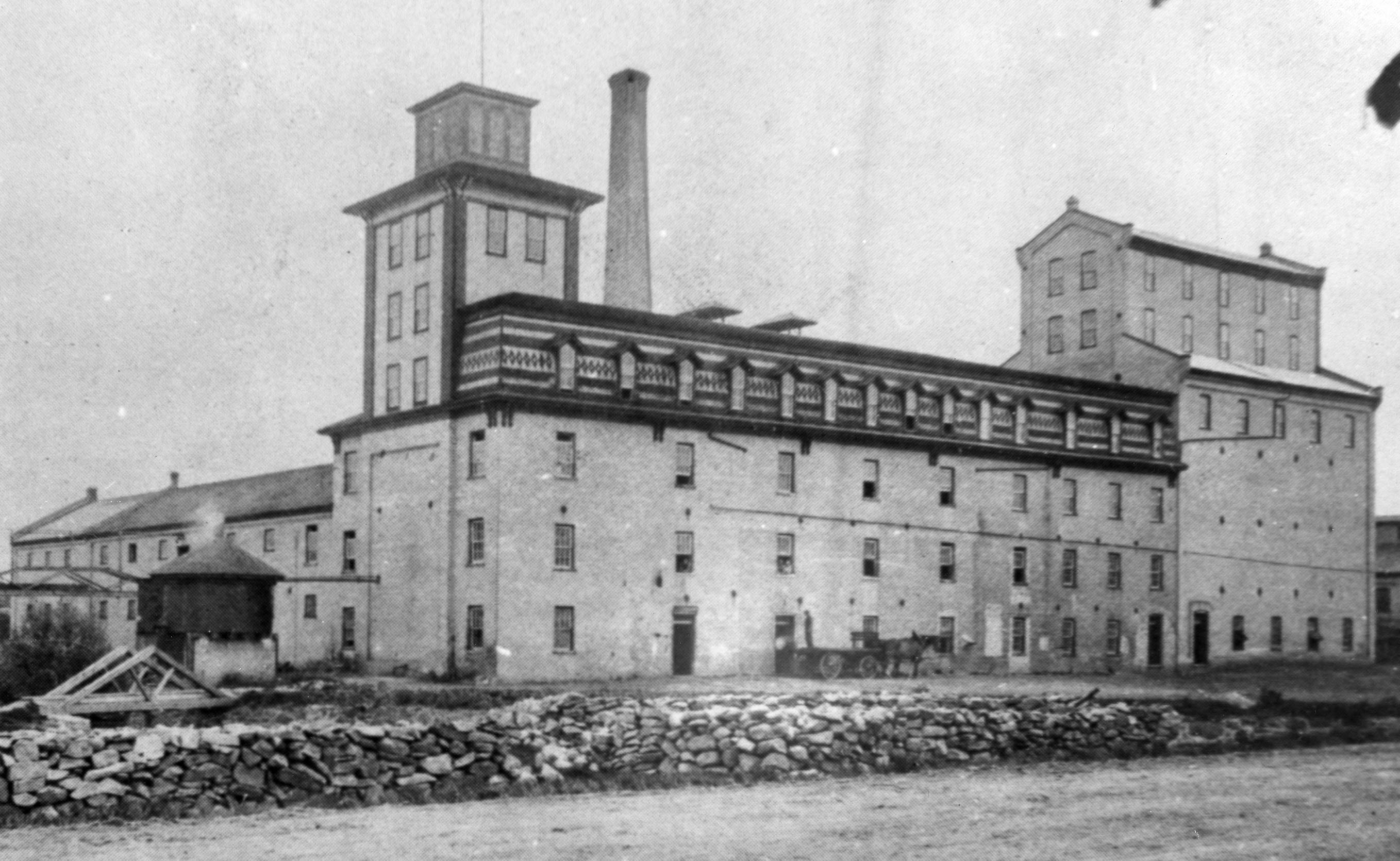
William Hespeler and George Randall founded the Granite Mills and Waterloo Distillery in 1857. Joseph E. Seagram took over the company in 1883 and the Seagram Company was born. Under Seagram, the company adopted the distinctive motto, Integrity, Craftsmanship, Tradition.

Timeline
1857 The Seagram distillery begins as the Granite Mills and Waterloo Distillery under William Hespeler and George Randall.
1863 William Roos joins the Granite Mills and Waterloo Distillery ownership team.
1864 A young Joseph Emm Seagram buys Hespeler’s shares of the business.
1869 George Randall and Company forms a new partnership.
1875 Exports from the Waterloo Distillery reach Great Britain and the United States.
1878 George Randall leaves the George Randall Company partnership.

1881 The name of the company becomes Seagram & Roos.
1883 Now under the sole ownership of Joseph E. Seagram, the company becomes Joseph Seagram Flour Mill and Distillery Company. Seagram operates under the name Waterloo Distillery, and concentrates on distilling.
1911 Seagram’s company becomes Joseph E. Seagram and Sons, Limited. He brings his sons, Edward and Thomas, into the partnership.
1919 Joseph E. Seagram dies and his sons take ownership of the company.

1928 The Bronfman brothers buy the Seagram distillery and incorporate it into their own distilling company. Under their leadership, Distillers Corportation-Seagrams Limited becomes the world’s largest producer of spirits.
1934 American Prohibition ends and Seagrams Ltd. whiskies take America by storm.
1940s The Seagram plant produces industrial alcohol for the war effort.
1957 In its 100th year, production at the Seagram plant expands with the construction of new warehouses well into the 60s and 70s.

1971 Samuel Bronfman dies and his two sons, Charles and Edgar Sr., take over operations.
1982 A period of rapid decline for the distilling industry in Canada begins. Distilleries close throughout the country.
1990 The Seagram plant announces that it will be closing its doors.
1992 The Seagram plant officially closes.
Integrity: Managing the Plant
As the distilling business grew and Joseph Emm Seagram took ownership, the company shifted its focus to distilling. The distillery went on to sell its products worldwide and reached annual sales of over a billion dollars. In part, this is thanks to the strong leadership of the plant’s owners and managers.

Joseph Emm Seagram (1841-1919)
Joseph Emm Seagram was a key member of social, industrial, and political life in Waterloo. He went on to buy out the owners of the Granite Mills and Waterloo Distillery in 1883. The company eventually grew to become the world’s largest producer and distributor of spirits and wines.

Samuel Bronfman (1889-1917)
Samuel Bronfman began his career in the family’s Montreal hotel business. Bronfman’s own distilling company merged with Joseph E. Seagram & Sons in 1928. Despite prohibition, this merger triggered the worldwide success of the company. The company went on to produce some of the best-selling brands in the world.

Management
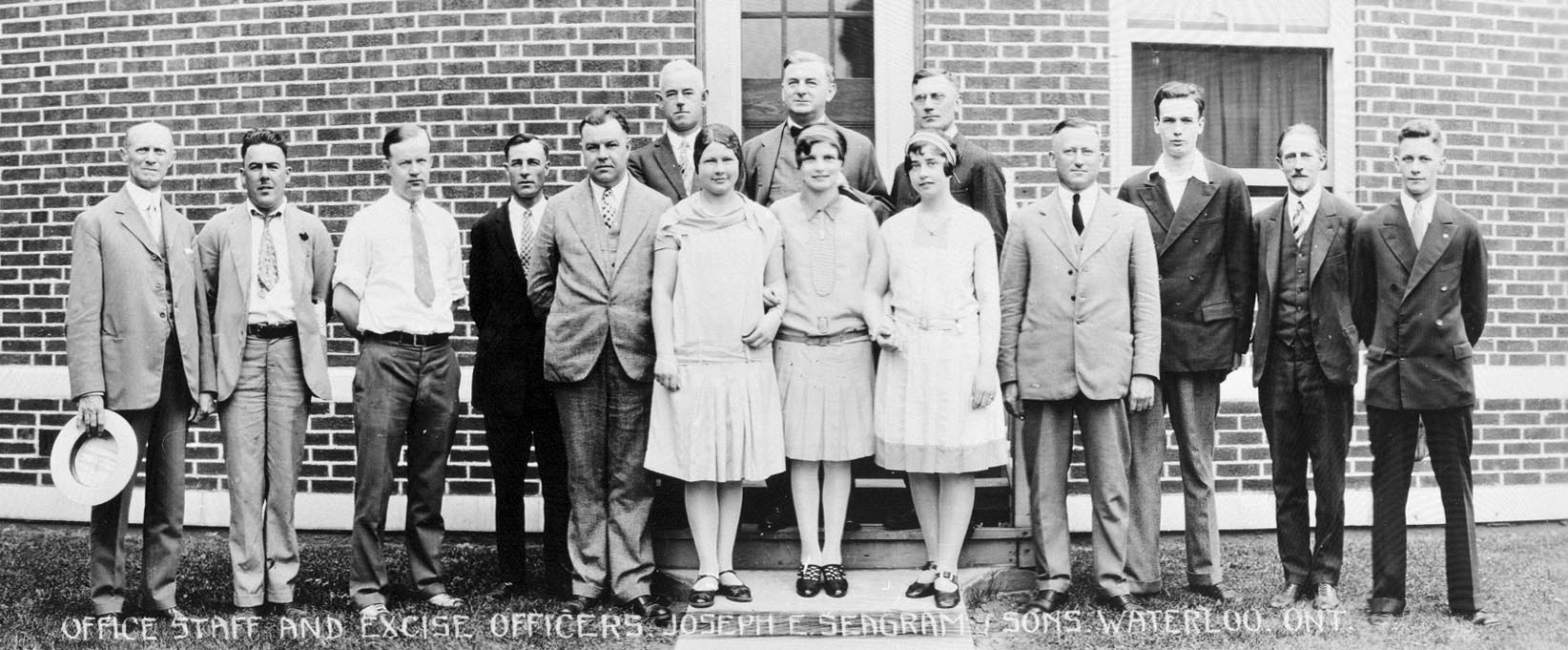
The Plant Manager oversaw day-to-day operations like production quotas and quality requirements. A team of superintendents, department heads, supervisors, and administrative staff supported the manager. The company supported upward mobility between management positions and promotions were common.
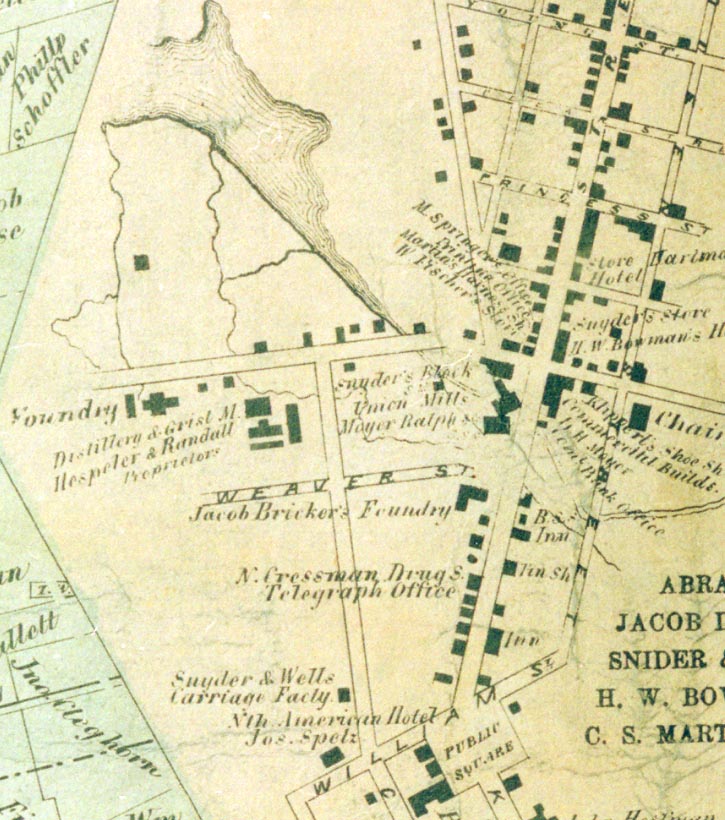
Laurel Creek separated the administrative offices from the rest of the plant. A wooden footbridge connected these two sections of the plant. Crossing this bridge became associated with disciplinary action. Workers would joke and tell each other to, “be careful, or you’ll be hauled across the bridge.”
Craftsmanship: Making Fine Canadian Whisky
Former Seagram employees remember the company as being the top-rated employer in the community. Other factory workers coveted distillery positions. Many noted the higher rate of pay, positive work environment, and fair treatment. Generations of families worked for the distillery, often side-by-side. The growing success of the Seagram Company was the result of its hard-working employees.

Working at the Seagram Plant
Frieda Eichols worked in the bottling room for 49 years. Working at the Seagram distillery was a job for life.
In 1864, the Granite Mills and Waterloo Distillery employed 15 men. At the peak of operations in the 1970s, the Seagram Plant employed a total of 250 men and women. These jobs involved the grinding of grain, distillation of spirits, and administrative positions.

Many female workers recognized the inequalities at the plant. One bottling line worker commented, “All kinds of men would tell you that they would never have taken our job… ‘cause you can’t get a man to work like women work.” - Janet Horofker, 1975.

Unionized employees at the Seagram Plant used punch cards to record working hours. At the start of a shift, workers moved their cards from the left side of the punch card rack on the wall to the right empty rack. At the end of a shift, they would return their cards to the left rack. Pay day was every Thursday!

Unionizing the Seagram Plant
Workers at the Seagram plant joined the Distillery Rectifying and Wine Workers’ International Union of America on July 1st, 1941. Under the presidency of Oliver Sehl, the plant workers became members of the Local No. 48 branch. Membership at the union was open to all workers who did not have the authority to hire or fire other employees.
The Union changed working conditions at the Seagram plant. The Union negotiated wage rates for the first time and they classified positions according to their level of responsibility. The Union also addressed employee benefits and rights, such as overtime pay and vacation time.
The Union affected social life at the plant as well. The Social Committee organized annual picnics and Christmas parties. Members often participated in community activities such as parades and city sport leagues.

Maintaining Quality
The maintenance crew at the Seagram plant made sure the distillery equipment was running. If a machine broke down, it led to costly down time and stalling. Maintenance jobs were divided between general and bottling tasks. General workers focused on equipment throughout the plant. The bottling crew maintained the bottling lines.

Health and Safety
The Seagram Company advocated for adherence to health and safety guidelines. Yet, minor injuries and serious accidents did still occur. In the 1960s a comprehensive health and safety program was introduced. A registered nurse was hired to be available to staff on a daily basis to treat injuries and conduct basic tests.
The plant formed a safety committee to focus on prevention, investigate work practices, and educate workers. They encouraged workers to, “participate in your safety program, it’s in your own interest. Safety is the only real wage guarantee.”
Tradition: The Stories Behind The Seagram Products
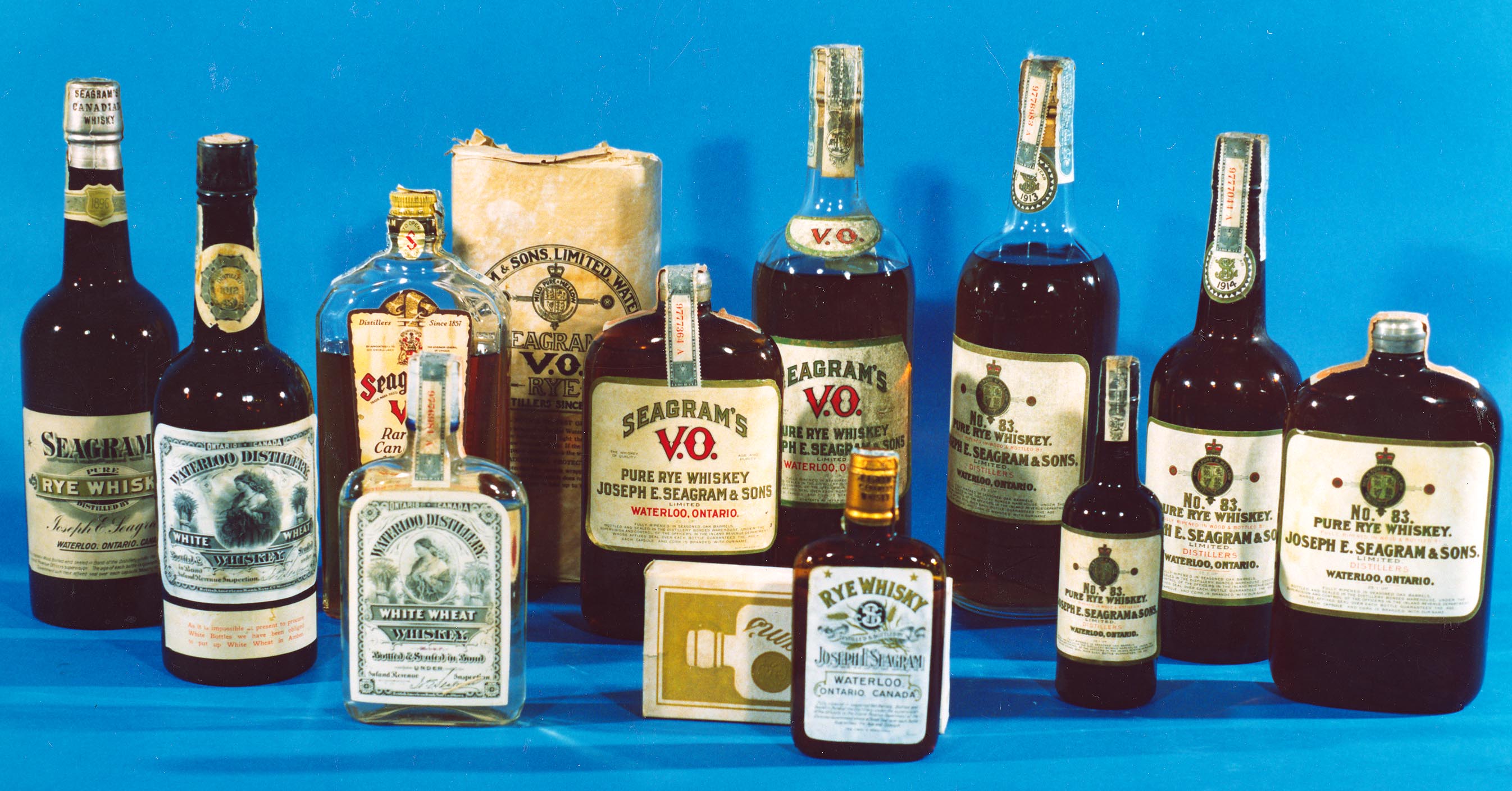
The success of the efforts of the owners, managers, and workers at the Seagram plant is seen in its rich tradition of quality spirits. Many of these notable spirits have their own distinct origin stories.

White Wheat
White Wheat whisky was an early product of the Seagram distillery. The core grain in this spirit was wheat. The attractive label was designed after a British bank note and made this brand a popular buy.

Seagram’s 1883
To celebrate his acquisition of the company, Joseph E. Seagram distilled a new whisky. Seagram sold this blend for the first time in 1887. By the 1890s, large quantities of Seagram’s “No. 83” made their way to the United States. This whisky became one of the most popular whiskies in the U.S. market.

King’s Plate
In 1953, Seagram introduced a new King’s Plate label design to the Canadian market. The bottle label displayed an illustration by A. H. Hider from 1906 commemorating the victorious Seagram horse racing. Seagram previously released a special King’s Plate label for the King and Queen’s visit to Canada in 1939.

5 Star
There are a couple launch dates for Seagram’s 5 Star whisky. The Seagram distillery pre-tested the whisky as Five Star Special in 1960. They changed the name to Five Star in 1962. This spirit was an immediate success. Five Star became the first brand in Canada to sell 1 million cases in 1974. This spirit is recognized by its distinct packaging featuring a silver star with the number 5 on it. The number 5 in its name and label reference the whiskies used in the blend, which were all at least five years old.

Gordon’s Gin
In 1963, When shipping costs to Canada became an issue, London based Tanqueray Gordon and Co. producers of Gordon's Gin, and Vodka, entered into a lease arrangement with the Seagram plant to produce for the Canadian market from the Waterloo Plant. The Gin was produced in the former cooper shop. Tanks were brought in from the UK and Charles Phypers, a native of London, was the head distiller and only employee. He was promoted to head of Canadian operations in 1964. Twelve to fifteen Seagram plant employees were borrowed for the production of the two products.
Gin started to flow from Waterloo on June 3, 1964. The operation was capable of producing 4,000 gallons a day strictly for the Canadian market. Vodka production started around 1976, and amounted to 2,000 gallons on the days they made vodka, which was not every day.
The contract was for 25 years and in 1987, Tanqueray was taken over by a conglomerate controlled by Schenley's distillery. They decided to move the gin and vodka operations to one of their under utilized facilities in Valleyfield. In 1986, Mr. Phypers retired, and Tanqueray had been flying in "floating distillers" for six week periods until 1989 when the two operations quietly relocated.

“V.O.”
Seagram’s “V.O.” is one of the best known whiskies produced at the Waterloo plant. The Seagram distilllery released this blend in limited quantities in 1913 to celebrate the marriage of Joseph E. Seagram’s youngest son, Thomas. The original meaning of the initials was never written down. Family tradition states that “V.O.” stands for Very Own. Others claim that the initials stand for Very Old.
In 1940, the Governor General of Canada, Lord Athlone, allowed for his Coat of Arms to be added to the “V.O.” label. Later Governor Generals of Canada did not continue granting this warrant.

Crown Royal
Crown Royal is one of the most notable success stories in the history of the distilling industry. The Seagram Company blended this rye whisky as a tribute to visiting royalty. This spirit established a new standard of excellence among Canadian whiskies.
The tradition of Crown Royal began in 1939 with the first Royal Tour of Canada by King George VI and Queen Elizabeth. Samuel Bronfman created the crown-shaped bottle and dressed it in a royal purple bag to mark this historic occasion. Bronfman created the product to reflect the quality of the spirit and it caught the consumer’s attention.