Virtual exhibit
Seagram Cultural Heritage Landscape
Local history right under your feet
Seagram Cultural Heritage Landscape
Let’s Explore
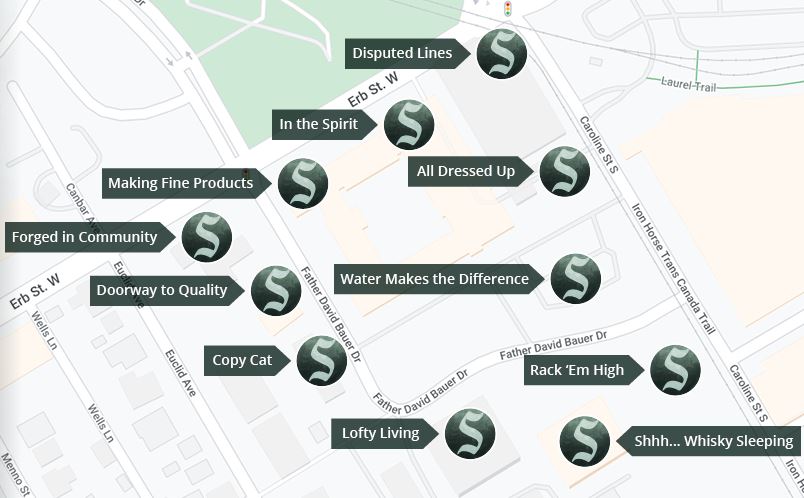
Have you ever stood in a spot or walked down a street and wondered what it was like 100 years ago, or even 500 years ago? On this virtual journey through the Seagram Distillery, we’ll do just that. We’ll explore the land’s history, from its origins as Indigenous hunting grounds to its rise as the world’s largest centre for distilled spirits. We’ll also look at how the remaining structures, each with a unique purpose, continue to shape Waterloo’s economic vitality. Join us as we uncover the rich history of Waterloo's Seagram Cultural Heritage Landscape. The map will highlight the locations of the buildings discussed in this exhibit.
Ancestral Lands
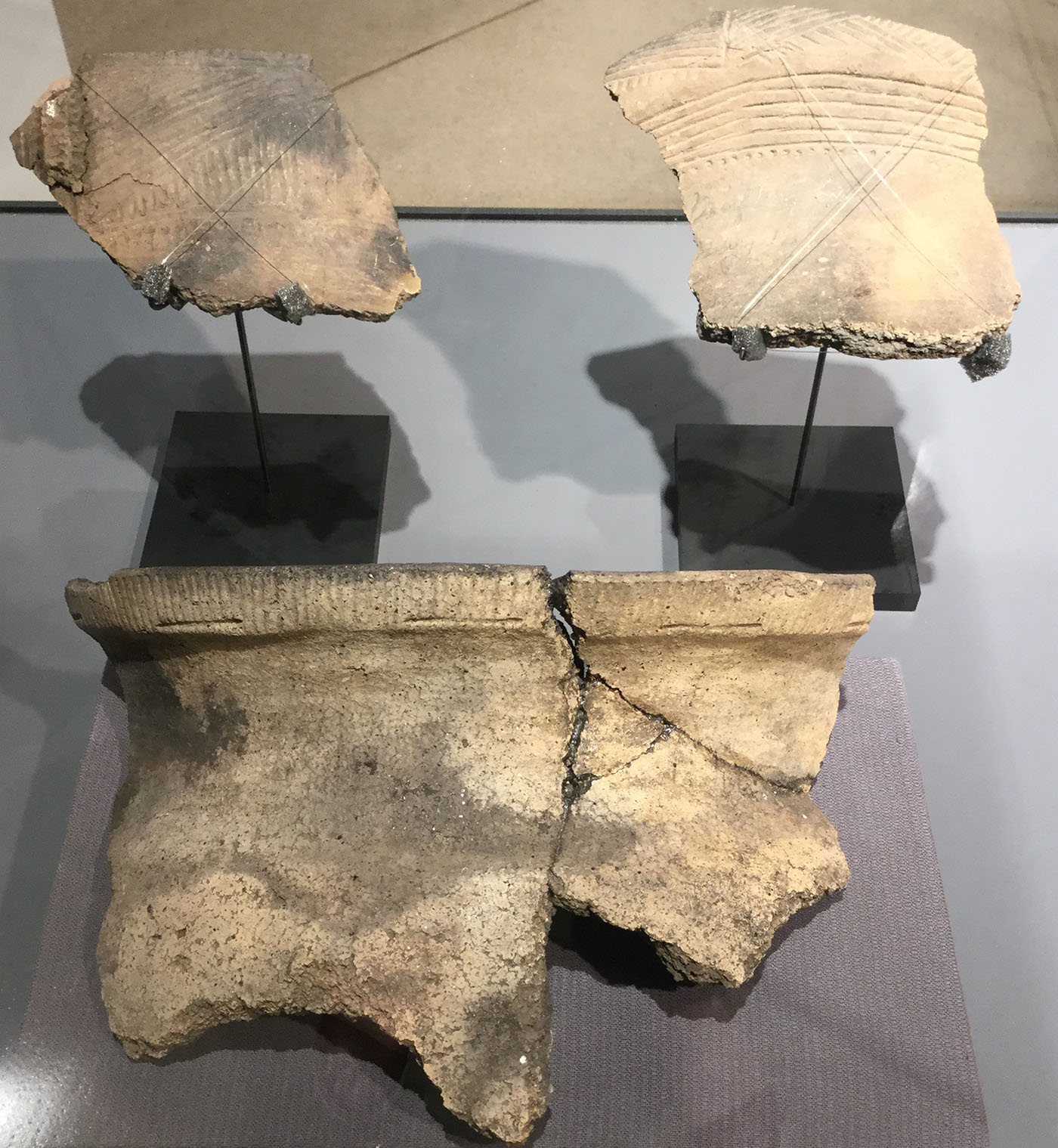
Prior to settlers naming this landscape, the land had been home to many different Indigenous peoples. Their presence on the land is established through the tools and pottery left behind. For a time, the Attawandron or Neutral People cared for this land and called it home. The Neutral People were a confederacy made up of many smaller nations. While here, they set up sophisticated agricultural societies and vast trading networks.

Dish with One Spoon
Some of the Attawandron or Neutral People were absorbed into the Haudenosaunee Confederacy. Following this, the land became part of the Dish with One Spoon Wampum between the Haudenosaunee and Anishinaabe Nations. A wampum is an agreement represented in the form of beads. These beads use images or symbols to represent the agreement, in this case a dish and spoon. These symbols signified a shared and respectful care for the land where each would only take what was needed. Listen to Richard Hill, knowledge keeper from the Six Nations of the Grand River, share more about the wampum.

The Haldimand Track
Following the American Revolutionary War, the Haudenosaunee were granted six miles of land on either side of the Grand River from its month to it source. With the division between Great Britain and United States, the Haudenosaunee were forced to split their territory and move further into Upper Canada, as it was known at that time. Despite having title to the land, a European way of understanding land, new settlers began encroaching on the six miles of the Grand River. Through a series of events, a group of Mennonite settlers acquired their land under the name The German Company. This marked a change with the introduction of European presence on the land.
From Mill to Still
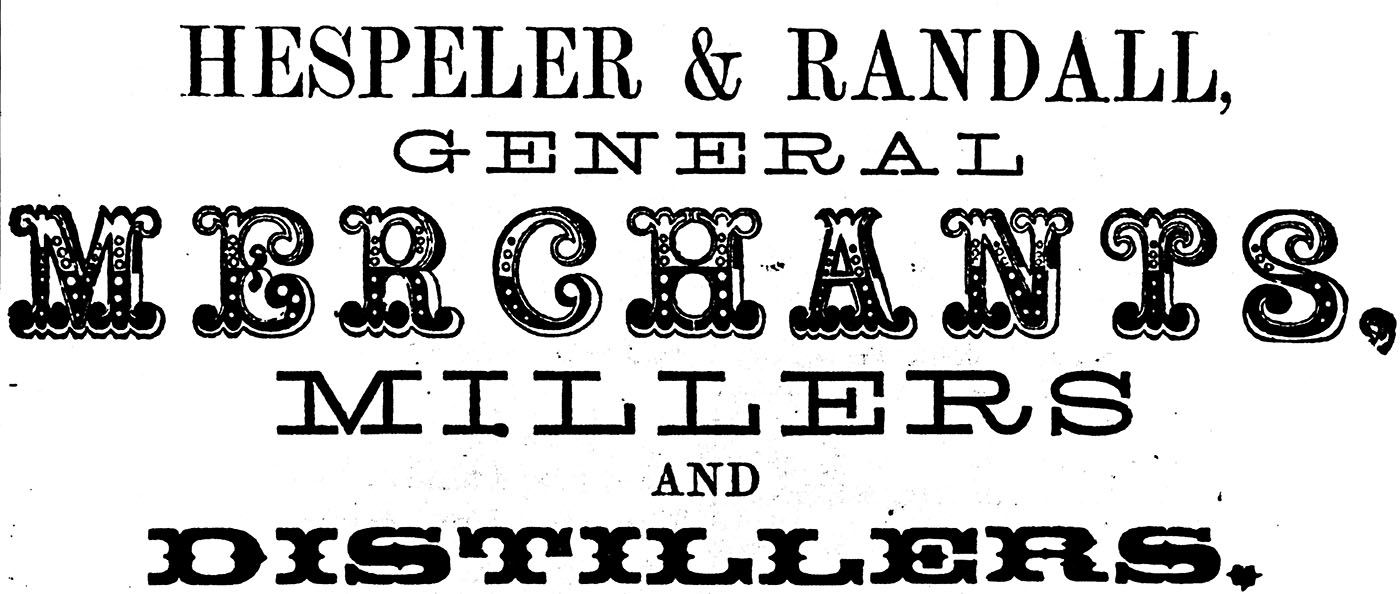
In 1857, settlers William Hespeler and George Randall gave this piece of land its first European name: Granite Mills and Waterloo Distillery. The focus of their business was operating a flourmill, grinding grains, mainly wheat, into flour. Making whisky with the leftover grains was only a small part of their business. In 1883, Joseph E. Seagram purchased the company renaming it The Joseph Seagram Flour Mill and Distillery Company.

Waterloo's Distillery District
The Joseph Seagram Flour Mill and Distillery Company was owned and operated by a second-generation British immigrant, Joseph Emm Seagram. Young Seagram was an ambitious and innovative person. Under his leadership, he restructured the business focusing solely on distilling whisky. He skilfully began combining or "blending" different types of grains to create complex flavours for whisky. These new rich flavours produced in Waterloo gained worldwide attention, creating a demand for the young distiller’s products.

All in the Family
When Joseph invited his sons Edward F., Norman, and Thomas W. to join him in the family business, a new company name was in order. In 1911, the company was incorporated as Joseph E. Seagram and Sons. These young entrepreneurs would eventually take over the family business. As sales boomed the small Seagram distillery grew, adding property to the landscape. Signature brands such as Seagram’s 83, White Wheat, and V.O., bearing Waterloo Ontario on their labels, placed this small community into the global marketplace. Following Joseph’s death in 1919, his sons took over, but the business would suffer badly with wartime restrictions and U.S. prohibition. In 1928, the Seagram sons made the decision to take the Waterloo distillery public.

New Name - More Acclaim
Samuel Bronfman, a Jewish immigrant and distiller, had unsuccessfully competed in the distilled spirit space with Seagram. His fledgling distilleries out west and in Quebec were no match for the mighty Seagram brand. However, he persevered and negotiated the purchase Bronfman wisely kept the Seagram name because of its existing global recognition for quality and good taste. Bronfman worked hard at acquiring other smaller family owned distilleries around the world. In 1939, he developed the company’s keystone brand Crown Royal, to be distilled at the Waterloo plant. A distillery that had seen many successes was in danger of being lost in 1953 when Bronfman made the decision to close the Waterloo plant. He reconsidered his plans after visiting the plant, recognizing that the Waterloo plant was indeed a jewel.

Moving Out
Samuel Bronfman's beloved historic Waterloo plant was a going concern in the 1970s. Leadership had passed to his two sons Edgar and Charles in 1971. Shortly after Sam died, the company name was changed to Seagram Company Limited. In the 1980s, the unthinkable happened when the international whisky market collapsed, forcing the brothers to consolidate operations. The Waterloo plant was in need of repairs and upgrades, with limited land to expand. Due to many factors, a decision was made in 1992 to close the Waterloo distillery. As you explore the Erb, Caroline, and Father David Bauer Street landscape, you can still catch glimpses of our proud distilling past. Some of the buildings have been repurposed, preserving our architectural and cultural history. This landscape continues to inspire and change with Waterloo.
Rack ‘em High!
Barrel Warehouses #11 & #12
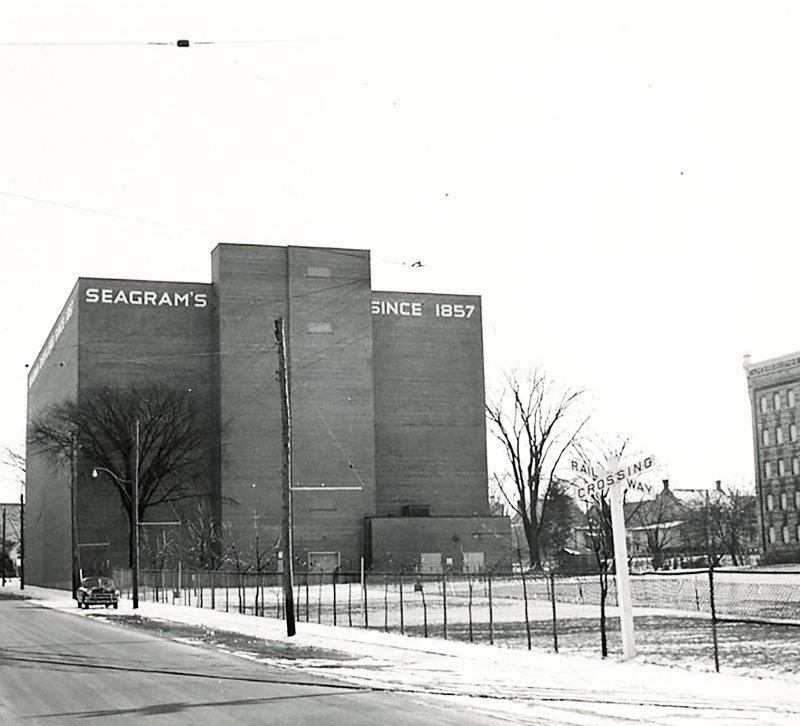
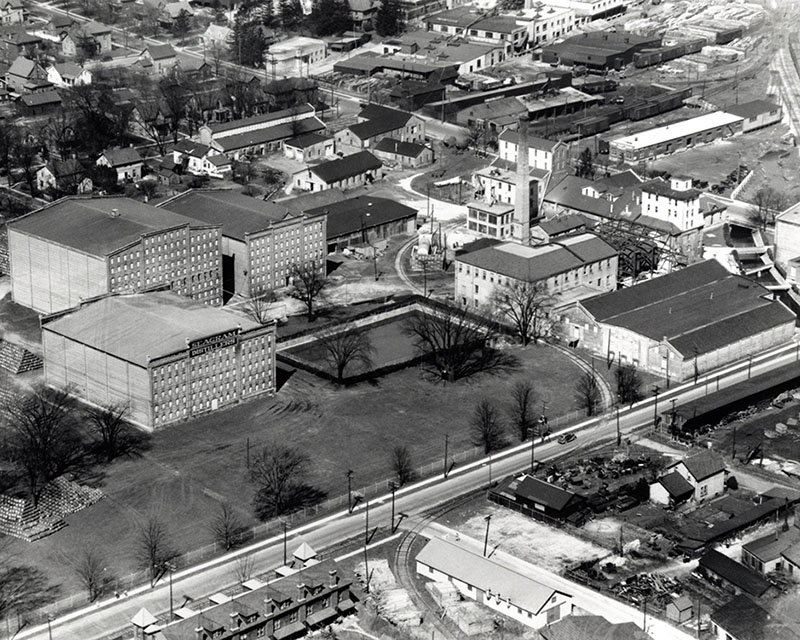
Two five-storey red brick warehouses appeared on the Seagram landscape in 1958. The modern buildings along Caroline Street were constructed from reinforced concrete walls, no longer the wooden beamed structures of the past. Warehouse employees now worked in comfortable air conditioned buildings. Automated equipment in the new buildings made moving the heavy spirit-filled barrels easier and safer - a hoist in Barrel Warehouse #11, and an escalator in Barrel Warehouse #12.

A Centennial Celebration
Barrel Warehouses #11 and #12 were built as part of a major expansion for the Waterloo plant, at a cost of $1,000,000. The company made clear its steadfast commitment to Waterloo, as it celebrated 100 years in business. Additional offsite storage was built in Breslau on a farm named Hopewell, yet another property owned by Distillers Corporation - Seagram Limited. It seemed the Seagram distillery would always be part of Waterloo fabric.

Working in the New Warehouse
As the distillery expanded in the 1950s, a larger company-wide safety plan began to take shape. In the early 1940s, Waterloo plant workers had unionized to form Local 48 of the Distillery Rectifying and Wine Workers’ International Union of America. Under the new union, working conditions greatly changed. In the 1940s, Seagram employee Bert Theil earned 95 cents an hour, and wore his regular clothes to work each day. By the 1960s, his wage had increased considerably, and he and his fellow co-workers were wearing company uniforms, safety shoes and safety glasses. The distillery launched in-house campaigns such as “Safety is the only REAL wage guarantee”. A safety committee was formed to educate workers and prevent hazards. Importance was placed on the need for safety and injury prevention practices at the distillery and in the newly constructed warehouses.

What happened to #11 and #12?
Today, the Barrel Warehouse Park has replaced Barrel Warehouses #11 and #12. The name references the land's previous life and use. While you enjoy the park, you might notice a few of the features planned by the landscape architect, Janet Rosenburg and Associates. The northern edge of the park is lined with rows of tall grasses referencing the farmer’s fields, which supplied the grains essential for making the whisky. The park’s southern edge is a public art displays of distillery equipment including column stills, tall metal pipes used for collecting the alcohol.
Shh...Whisky Sleeping
Bonded Barrel Warehouse #9, Seagram Barrel Lofts
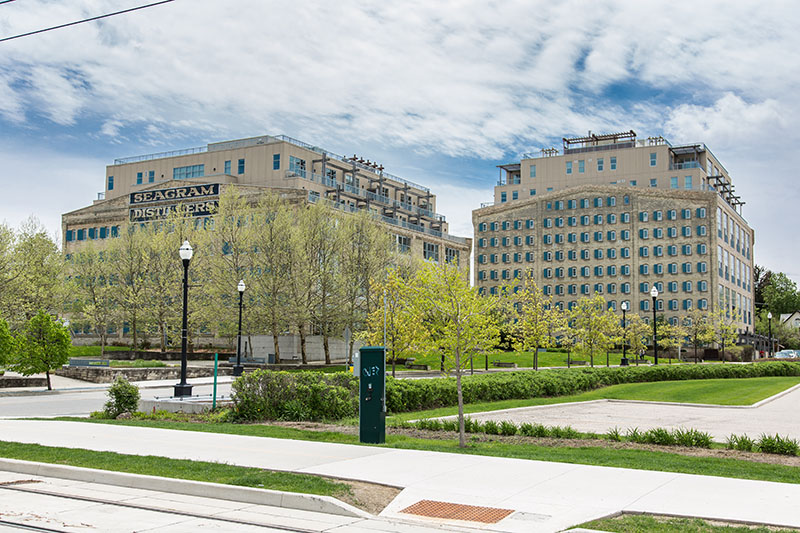
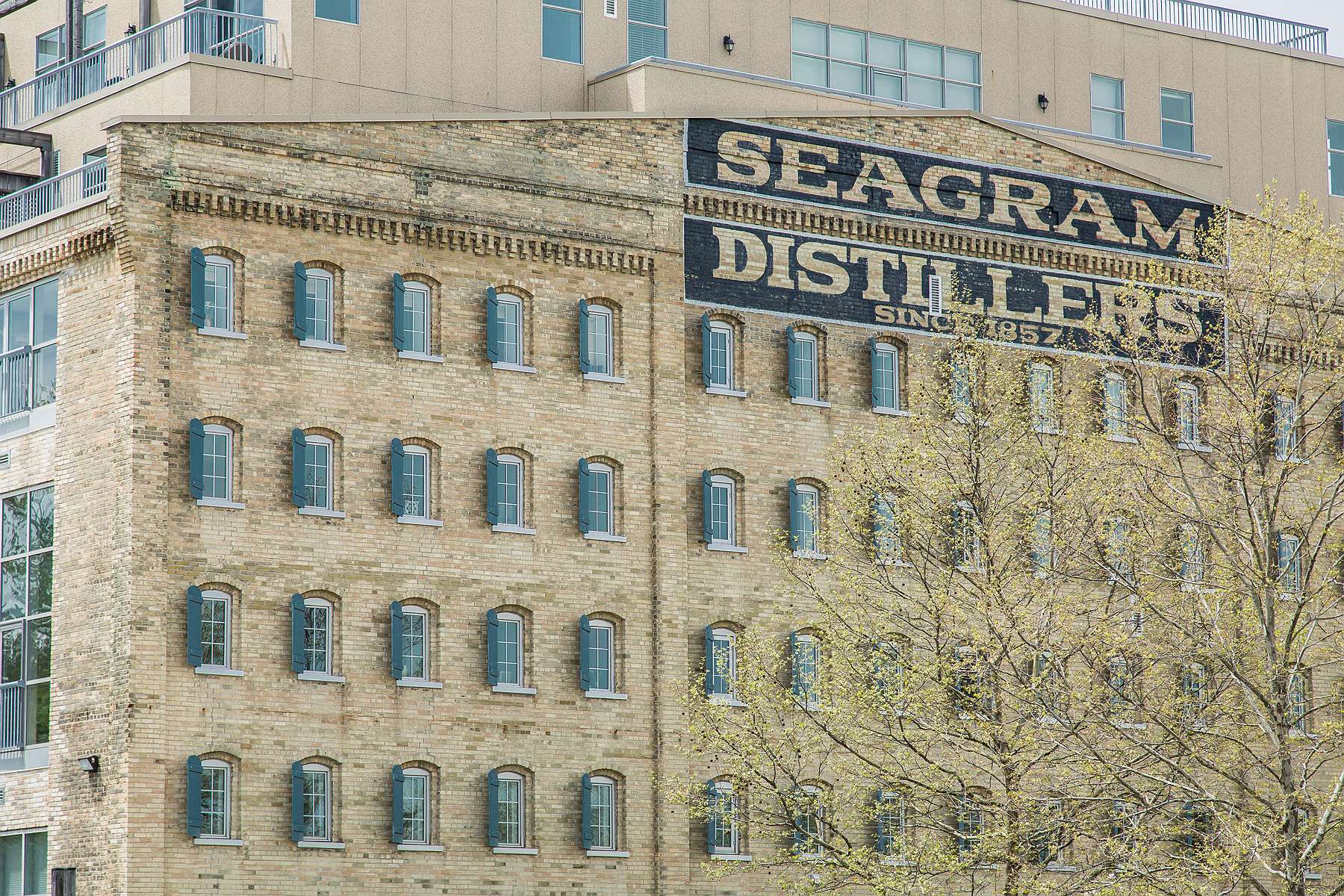
Barrel Warehouse #9 is a five-storey brick building used to age barrels of whisky. The buff yellow bricks are believed to have been made right here in Waterloo! This 1892 building also has some iconic features, such as blue shutters and a proud “Seagram Distillers” logo, a hint to its former use. If you look between the words “Seagram” and “Distillers” you will see neoclassical brick work design. This building has tall brick pilasters (pillar-like features built into the brick wall) which divides the front into three sections. The construction demonstrates a high degree of technical achievement. These warehouses were often built as the result of Joseph E. Seagram’s other passion, horse breeding and racing. It was said that Mr. Seagram would construct a new warehouse every time his horse won a significant race.

The Daily Duties of Working in the Warehouse
Working in the warehouse was a tough job. Four to six men were needed to move the carefully inventoried whisky barrels around. This building had a manpowered hoist at the top, making the movement of these 500 lbs (227kg) barrels much easier. With two men on each floor, they pulled the rope and tackle together to move barrels between the floors. This hoist was very helpful in preventing back injuries. Before moving a barrel, workers opened nearby windows to provide light and air circulation. The vapours from the ageing alcohol were quite strong. A wooden mallet was used to secure the bung (circular wooden stopper on the side of a barrel) before handling the barrel. On an average day, the crew moved 300 barrels. Donald Oberholzer remembers well how hard this job was. He recalls, “The work was heavy, but it was low pressure and if you finished early, you could play cards!”

From Sleeping Barrels to Sleeping People
When the Seagram distillery closed in 1992, the warehouses were cleared of their inventory and left sitting empty. In 1998, Terra View Homes and Kiwi Newton Construction joined to create the Barrel Works Group Ltd. They re-envisioned the warehouses as condominium buildings, a new place for people to call home. The community was thrilled by this new venture and by January of 1999, phase one was 70% sold. Waterloo residents got their first look at this new vision later in April when the first model suite was completed. After much work, residents began to move into the newly transformed building in the fall of 1999. The project cost 24 million dollars and took two and a half years to complete.

Lofty Living
Find out what living in this building is like today from residents Adam, Johanna, and Dorian.
Lofty Living
Barrel Warehouse #7, Seagram Barrel Lofts
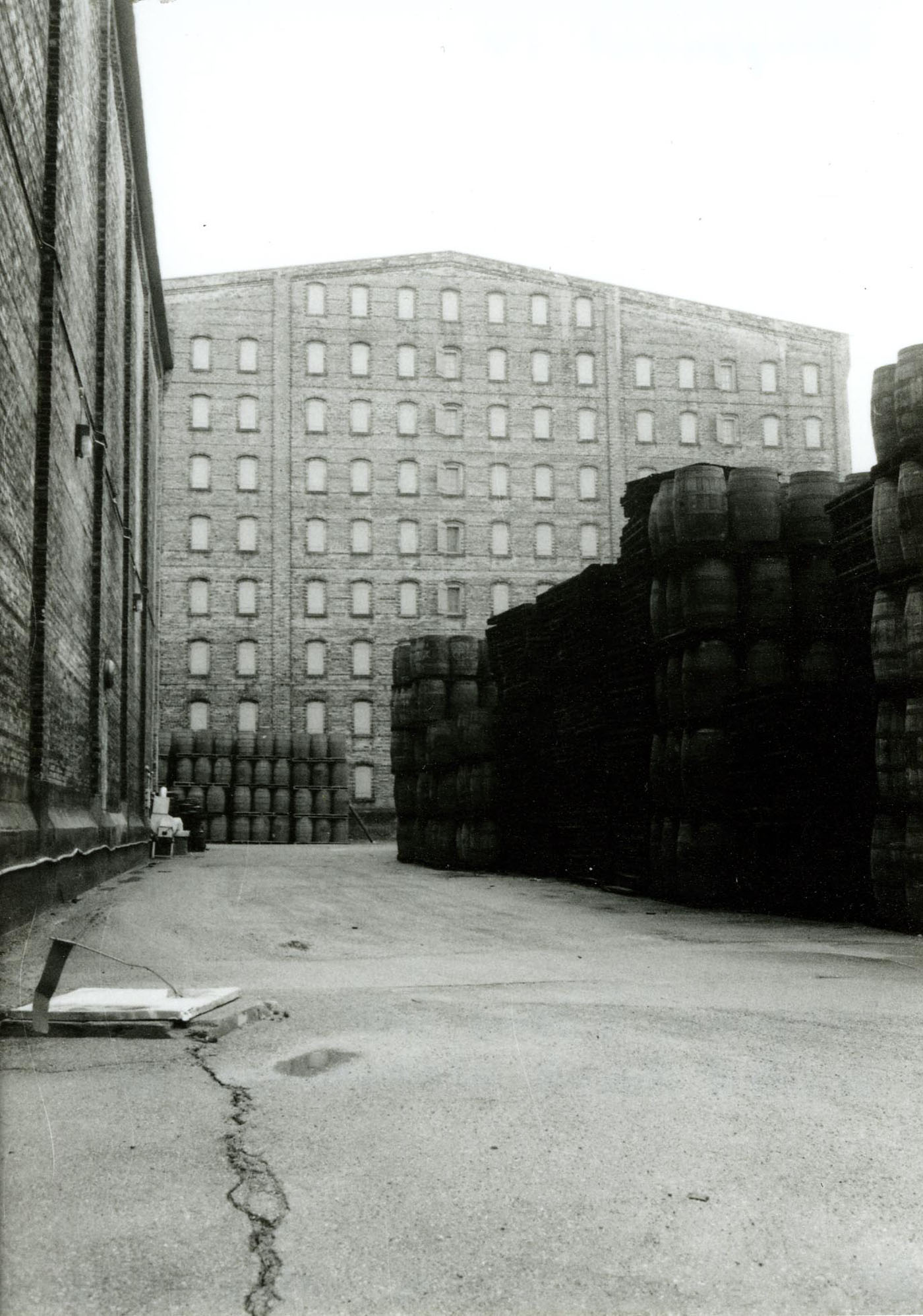
Can you guess how many windows this eight and a half-storey building has? Read on to find out! Built around 1892, it was actually constructed with bricks called Waterloo white made only a kilometre away. The name comes from their light yellow colour and the place where they were made. Typical of Victorian industrial architecture, the building features brick pilasters that break the building into three sections vertically. In addition, each of the 142 windows are capped with brick arches. This large building once held a wooden racking system to support around 21,000 barrels of ageing whisky!

A Life-Long Job
For many workers, the Seagram distillery was a life-long, family affair. This in part was because the distillery paid its employees well for their work. Bert Theil, his uncles, brothers, and even his father all worked at the distillery at various times. For others, the distillery was a job for life, even for women. Frieda Eichholz, who grew up in Waterloo, began working at the distillery after her sister encouraged her to apply. This started a 49 year career for Frieda in the bottle department where she rose to the position of forelady. Frieda and Bert are two of the many employees who spent their working careers at the Seagram distillery.

What is Old is New Again
The old barrel warehouse found a new life in the late 1990s when the Barrel Works Group, a developer of luxury loft condominiums, revived it. These two-storey units had multiple layout options ranging from 935 square feet (87 square meters) to 2,500 square feet (232 square meters). In order to accommodate this new use, an exterior wall was removed from the building and later rebuilt with the original bricks. The project also made use of the wooden barrel racking system by turning the red oak beams into doors, trim, railings, stairs and wall panelling. The re-purposing of bricks and wood was great for both the project and for the environment.
Copycat
7 Father David Bauer Drive
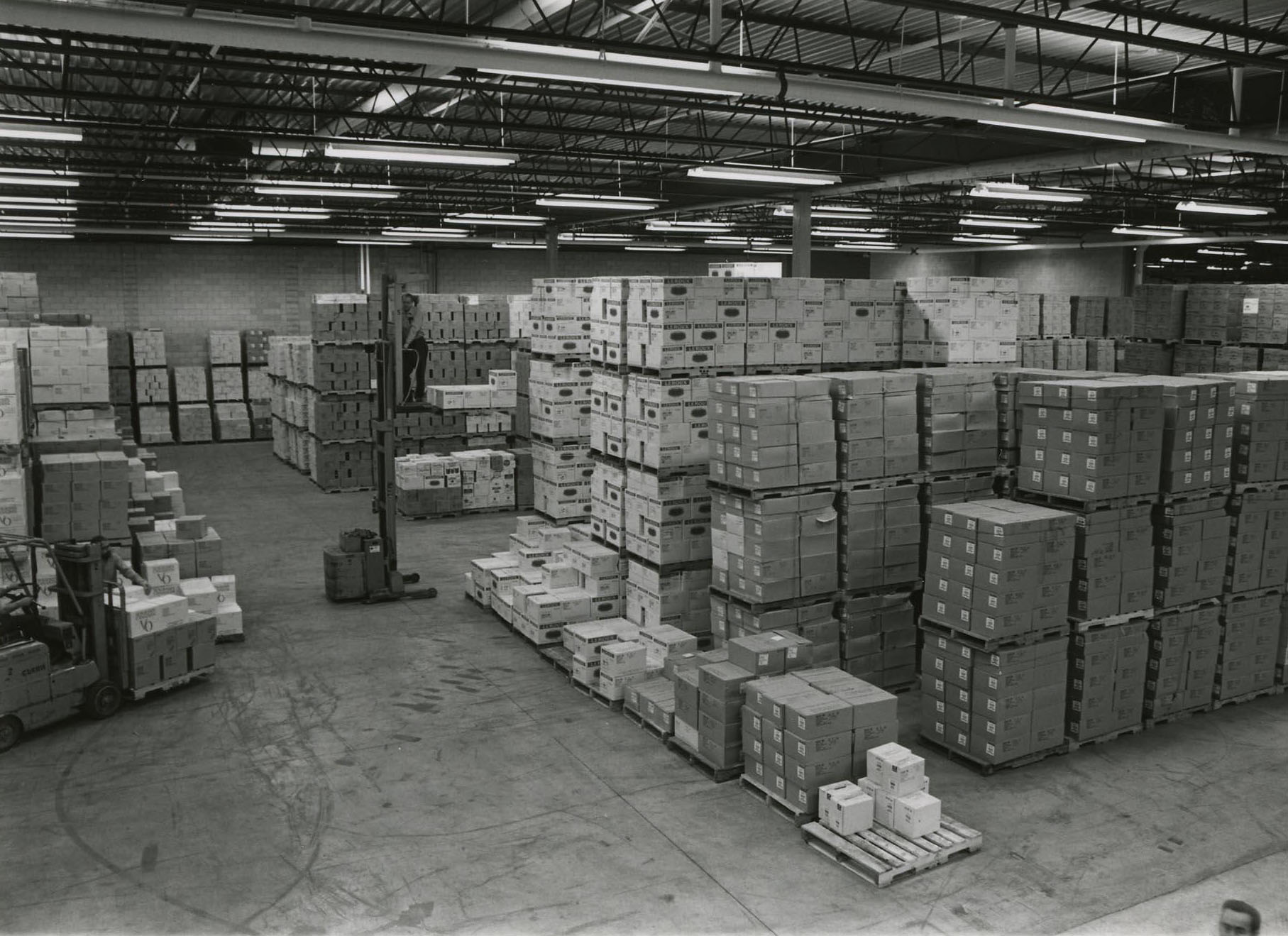
As early as the late 1890s, a small building holding bottles for the Seagram distillery stood at this location. Over time, the use of this part of the distillery changed. Bottling storage grew to include carton storage, with bottle washing machinery added in 1945. This now larger building re-shaped the landscape. Although it was never the heart of operations, this building was a key piece in preparing the whisky for packaging.

A Vision for a New Direction
When the Seagram plant closed in 1992, people began to look at other ways to use the former distillery site. In the late 1990s, developer Peter Degroot purchased this land along with a few other former Seagram properties. Degroot saw the potential for the space. Instead of building a typical commercial building, he chose to pay respect to the industrial history of this space by adding a Stillhouse inspired structure.

Spot the Similarities
Degroot reproduced the building’s Victorian style exterior by mimicking the former Seagram Stillhouse. He stated, “The philosophy is to create a unique building that adds to the historic well-being of Waterloo… rather than the typical commercial building.” The similarities between the original Stillhouse as seen from Erb Street and this replica building include: dormer windows, the upper windows along the roofline, the tall front tower, and the cupola. Take a closer look at the original Stillhouse picture and compare it to the building at 7 Father David Bauer Drive. Can you spot the similarities?
Doorway to Quality
Nuts and Bolts
This single-storey, yellow brick building has many unique features from its six arched windows lining each side, to the detailed brickwork surrounding them. The exterior facade features brick pilasters that mimic the pillars between the window sections. Another notable detail is the door or the “Doorway to Quality” as it was known. This door is a replica of the original one that once welcomed workers into the distillery office, and then into the Stillhouse after it was moved. The current doorway was a way to honour the quality of the past, and the enduring legacy of the Seagram distillery.
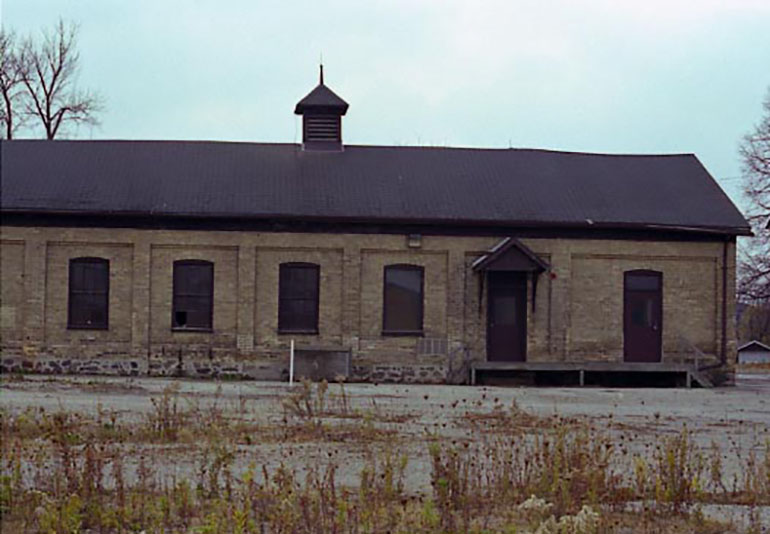

The Union Foundry
This one-storey building erected in 1858 was part of an expansion to the Union Foundry. The foundry began in the building next door; the expansion allowed them to produce farming tools. Eventually, Union Foundry merged with Waterloo Manufacturing and relocated to King Street. Joseph Emm Seagram acquired this building in 1890. Seagram used the building as a horse stable and later it served as a machine shop and storage facility for the distillery.

Maintaining the Factory
Serving as the machine shop by the 1940s, the machine shop crew was responsible for keeping the distillery running. They repaired machinery parts and made replacement pieces to prevent lengthy breakdowns that could disrupt production on the line. This crew was divided into two divisions; one group focusing on the bottling lines, while the other group worked on general maintenance. The bottling crew always had someone on “line patrol”, ready to fix issues as they arose. A shutdown of the bottling line meant huge losses for the company. Maintenance and repairs to the stills, pumps and pipes were all part of a day's work. By the1960s, employees doing this work were required to be certified industrial mechanics or millwrights.
From Factory to Food
After the Seagram plant closed in 1992, this building sat empty. Property owner Peter Degroot saw the beauty in the building and, in 1999, collaborated with John Creny to create a unique Mediterranean restaurant. The next era for the building was about to begin. The Solé restaurant opened with a focus on quality ingredients, and a distinctive name chosen to honour the source of these ingredients. Listen to John Creny as he shares his story of how this 24 year old restaurant came to be.

New Ownership
In January 2024, the Waterloo Region Record announced that John Cerny sold Solé to Kitchener's Charcoal Group of Restaurants. Solé restaurant was owned and operated by the Cerny Hospitality Group for 24 years. The restaurant will continue under the Solé name.
Forged in Community
The Cooperage and Office Building
This is the oldest building in the Seagram Cultural Heritage Landscape. Built in 1851, the two-storey brick building was originally the Buehler Foundry. The building has some beautiful features considering its original use was for making farming tools. The exterior features subtle arched windows, and a pointed gothic style window along Euclid Street. The corbelled brick roofline is made by placing bricks in an uneven way to create little gaps or steps in a pattern.
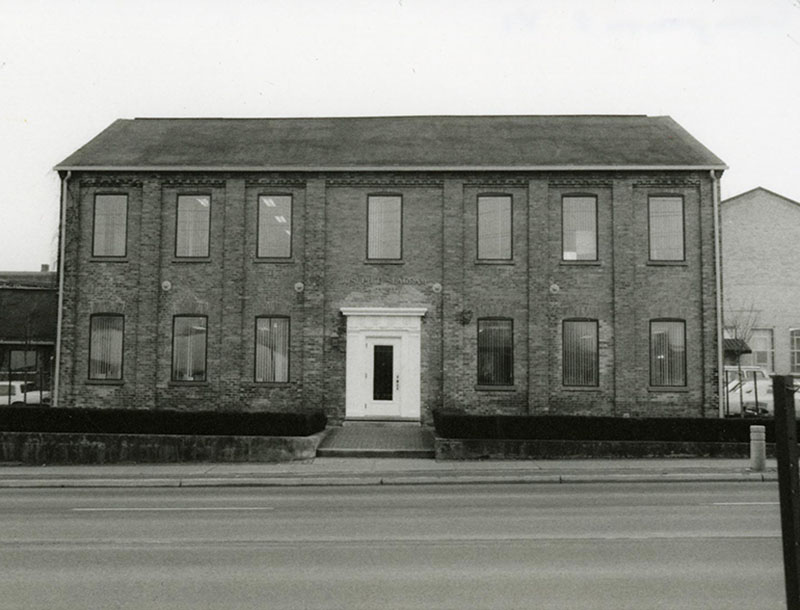

The Oldest Building in the Landscape
In 1851, Abraham Buehler, a German-Mennonite immigrant, acquired land on what had become known as Erb Street. He used his blacksmith training to start his own shop at this location. Here he made and repaired farming tools for the local community. Under Buehler's leadership the business grew, and by the 1860s he added steam power to improve production. Known as Union Foundry by 1888, it merged with the well-established Waterloo Manufacturing Limited located on King Street. By the late 1880s, the two-storey building was looking for a new owner and new opportunity.

Joining the Seagram Distillery
When Buehler closed his shop and moved Uptown, Joseph Emm Seagram was looking to expand his newly acquired distillery so he quickly purchased the property. Under the Seagram name, the building was put to use as a cooperage, lumber and barrel storage, and machine shop. In 1980, the building left its factory life behind and was renovated into offices for the Seagram Company’s engineers.

Working in the Cooperage
While serving as a cooperage, this building was home to workers like Bert Theil. Theil started as an apprentice learning coopering, the skill of making barrels. Many employees advanced from warehouse workers, to apprentices, to full coopers throughout their time with the distillery. Bert and 10 to 12 fellow coopers repaired existing barrels in this building for reuse. Repairs included removing staves (the side wooden pieces used to make the barrels), tightening the hoops (the metal rings which held the staves in place), and steaming the barrel heads for reuse. Barrels were constantly in demand to hold the distilled spirits as they aged to the perfect tasting notes.

A Change of Heart
When the Seagram distillery closed in 1992, Peter De Groot purchased this building. The adaptive rehabilitation would see this building become Re/max realty. Today, it continues its role in helping people from all over the world find a home in Waterloo.
Making Fine Products
Grain Elevator and Centre for International Governance Innovation
The building that started as a two-storey grist mill for grinding grain into flour in 1861 was the original heart of the Seagram landscape. In the early days, the distillery was a small side use for extra grain left over from the grist mill business. The mill started out with four milling stones and a 30 horsepower steam engine. It produced 12,000 barrels of flour and 3,000 barrels of whisky annually. When Joseph Seagram took over the mill and distillery operations in 1883, he saw the potential for the whisky business to grow and replace the flour milling business. By 1900, he had transitioned the heart of the company to producing only whisky. Seagram expanded this building to include large fermentation tanks and tall copper stills. The milling section also grew taller, increasing the amount of grain storage.
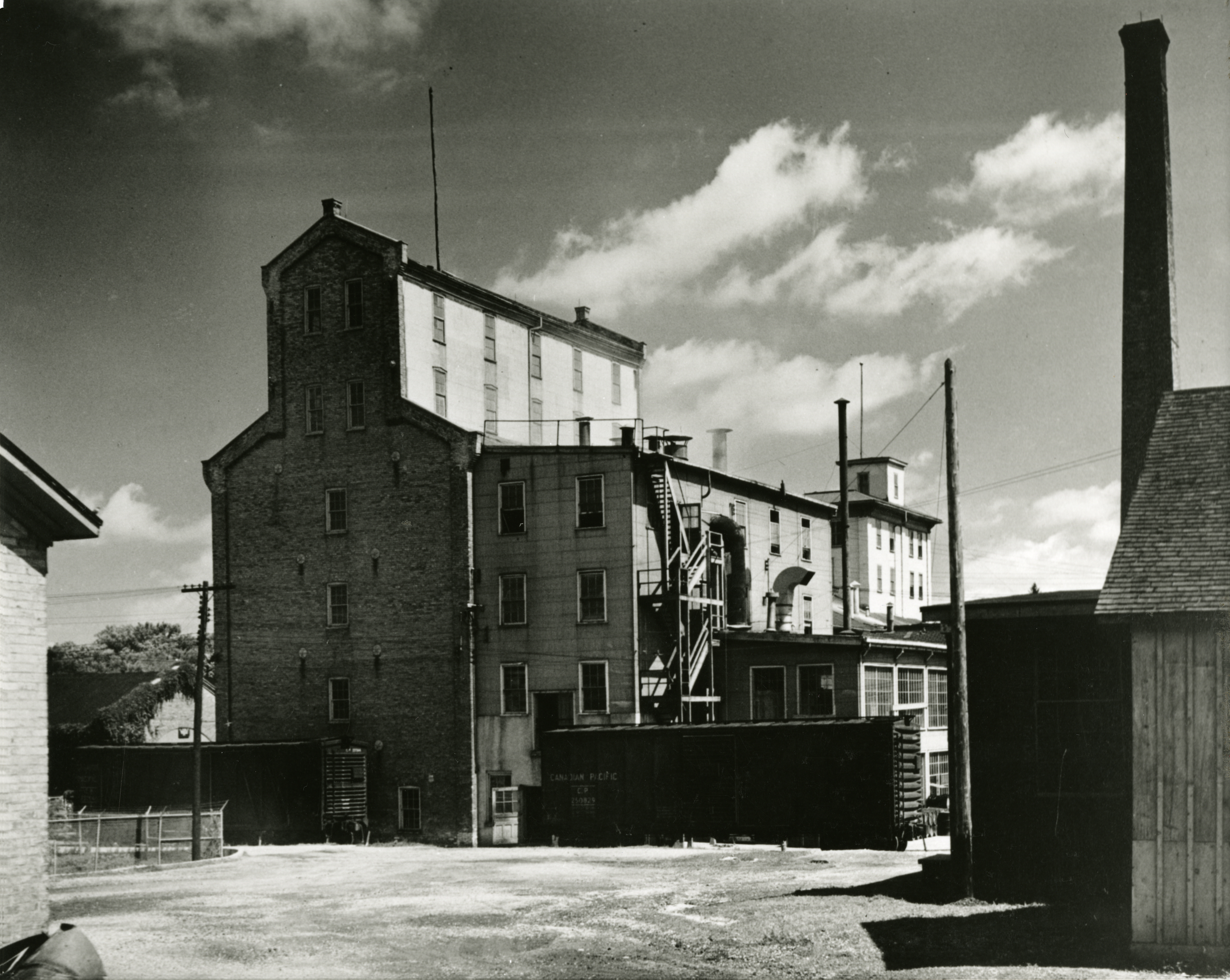

In the Spirit
Stillhouse and Centre for International Governance Innovation
The Stillhouse was the heart of the distillery where grain and water were mixed, fermented, and distilled to become alcohol. The space was set up to follow the work flow, with grain storage, milling, and distilling operations along Erb Street. The column stills made use of the height of the tower with its cupola. The tall pipes of the still collected the evaporating liquid ethanol. The section of the building along Caroline Street included the fermentation tanks and the bottling room at one time. As the popularity and demand for Seagram products grew, so did production. Significant changes to the building took place in the late 1940s that made way for the next expansion.

Burning for Change
In 1990, Seagram Company Limited announced it would be closing its Waterloo plant. This was due in large part to lack of space for expansion, and an increase in government taxation on spirits. What was to become of this notable landmark?

Burning for Change
Redevelopment proposals for a hotel and cinema went up in smoke when on July 12, 1993, a fire broke out. The fire spread rapidly through the alcohol saturated timber framed building, causing $450,000 in damages and $100,000 in content losses. The damage was so significant that the iconic building had to be torn down, drastically changing the landscape. The cause of the fire remains unknown to this day.

Thinking about a Change
After the remains of the fire were cleared away, the land sat empty and quiet. A very different feel for this once bustling landscape. A new vision to bring life back to this property took shape in 2010 when construction began on a new building. The Centre for International Governance Innovation (CIGI), an international think tank for global governance, moved in. The building’s special features of an inner courtyard and bell tower won the 2014 Governor General’s Medal in Architecture for what critics called “a profoundly humane environment.”

A Think Tank is Home
The Centre for International Governance Innovation (CIGI) acts as an independent, non-partisan think tank, and is run in partnership with the Universities of Waterloo and Wilfrid Laurier. Their main goal is to network, research and strategically work “to improve people's lives everywhere.” Waterloo resident Jim Balsillie began the initiative in 2001 as not-for-profit to examine global issues and challenges. Currently, the think tank is researching digital issues in security, trade, law and economics.
Disputed Lines
Barrel Warehouse #5 / The Seagram Museum
This five-storey yellow buff brick building still dominates the landscape at the corner of Caroline and Erb Streets. The warehouse was built in 1878 when the distillery was still milling flour and making whisky on the side. This was the fifth warehouse built by Seagram to hold ageing whisky barrels. While small in scale, it's estimated to have held 6,000 barrels, still substantial given whisky was not the primary business of the mill. This designated landmark features a shallow-sloped gable roof, iconic small-arched windows with wooden shutters, and a simple corbelled brick design along Erb Street.
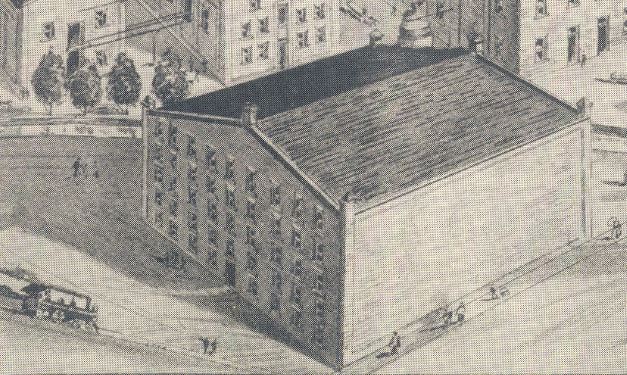

What’s with the Missing Corner?
This building has one unique feature you can see at the intersection at Erb and Caroline Streets. The north-east corner of this building has been cut off. The building was built with all four corners, however, in 1905 this changed. A dispute between Joseph Seagram and the Grand Trunk Railway (G.T.R.) led to a historic confrontation over a spur line running into the Seagram distillery. Seagram preferred to do business with Preston-Berlin Railway, a new company. The G.T.R. tracks on the Elmira line ran close to the building at the corner of Caroline and Erb Streets. In order to provide track space for the Preston-Berlin line, Seagram removed a portion of the building’s corner, whereupon the G.T.R. moved their tracks into this space. When Seagram removed another section of his building for the tracks, he enlisted the services of some of the members of the Waterloo Fire Department to use their hoses on the G.T.R. workers when they attempted to move the tracks a second time. The workers withdrew and the new Preston-Berlin railway tracks were finally laid, continuing through to the new station on Erb Street opposite the Seagram plant.

Barrel Warehouse #5
The warehouse was a busy spot at the distillery with barrels being moved in and out regularly. The whisky in these barrels was at least three years old. The racking crew working in this building turned and moved barrels to access whisky for testing or mixing. If the whisky did not meet standards, it was sent to the dumping crew who dumped the whisky! If the whisky was good, it was re-racked or shipped out by the shipping crew. The shipping crew loaded barrels onto railcars to be sent elsewhere for ageing, mixing or further testing. Finally, there was the leaky barrels crew. This crew consisted of 3 or 4 people who checked the floors of each warehouse for leaking barrels. The leaky barrels were identified and fixed. This unique crew prevented the loss of good whisky! It took three months to learn all there was to know to be a part of these crews.

A New Museum is Born
In 1981, Charles Bronfman, Co-chairman of the Board of Seagram Company Limited had a vision to create a museum devoted to the history and technology of wine and spirits. The Seagram plant was now the oldest plant in North America and Barrel Warehouse #5 was the perfect location. Peter Swann was hired to collect pieces from all over the world for the new museum including objects from France, Scotland and of course, Waterloo. He would become the Seagram Museum's first director. Architects, Barton Myer beautifully adapted Barrel Warehouse #5 into a world-class museum.

Make it Iconic
With the help of architectural firm Barton Myers Associates, Barrel Warehouse #5 evolved into its new role as a museum. Myers, known for Canadian buildings such as the Art Gallery of Ontario, set out to create an iconic building in Waterloo. He wanted to take this 19th century building and bring it into a new era. After two years of construction, Myers created what some have called iconic for its mixing of styles, known as Canadian Postmodernist architecture. Part of his brilliance was incorporating the wooden beams from the warehouse racking system into the exhibit space, and the harmonious addition onto the back. The building was awarded the 1986 Governor General’s Medal in Architecture.

The 'Boozeum'
The Seagram Museum was a unique museum owned by Bronfman’s Seagram Company Limited. When the $4.75 million building opened on May 17, 1984, it was a star-studded event attended by more than 300 politicians, dignitaries and Seagram executives. The day marked the beginning of a new era in Uptown Waterloo. In its first five months alone, it was averaging 700 people a day! By then, the collection had over 2,000 items including a rare 1919 Pearce Arrow replica whisky delivery truck, a 35-foot tall column still, and a floor-to-roof barrel racking system. Other unique museum features were a fine dining restaurant, and a liquor shop with select Seagram brand products for purchase. The Seagram Museum was the pride of the local community, drawing visitors from around the globe.

Meet your New Landlord
After only 13 years, it was announced the Seagram Museum would close in 1997. At its peak, the museum attracted around 170,000 people annually. In its final year, attendance had declined to 60,000. The City of Waterloo stepped in to purchase the property. Many development offers were made and fell through. Waterloo Maple, a local technology start up software development company, became the first to tenant to move into the iconic building. The City of Waterloo sold the building to Research in Motion/Blackberry former CEO Jim Balsillie in 2003, moving his recently launched Centre for International Governance Innovation (CIGI) into its new home. Other more recent occupants include online commerce giant Shopify, and Tangam Systems.
Water Makes the Difference
Water Reservoir and Trout Pond
Water is essential to make good whisky. The concentration of flavour compounds in the whisky is boosted by the quality of the water used. If Joseph Seagram was going to increase his whisky production, he needed access to lots of water. The stream running from Silver Lake in Waterloo Park through the distillery grounds was not enough in terms of volume or horse-power capacity to power his machinery. Seagram added a 500,000 gallon reservoir along Caroline Street to give him all the water he needed.

Whisky Trout
The Seagram distillery reservoir held vast amounts of water and some rather famous fish. The water was used for whisky making, and nearby in case of fire. The trout living in the reservoir helped keep the algae levels low and the water quality high. In the 1920s, a newspaper reported on the famous "whisky trout", claiming they moved with “shark-like voracity”. They had been seen climbing out of an ice hole in the reservoir and onto the ice to reach their food, creating what looked like a “mountain of trout”. In the early 1940s, the trout were permanently moved to a pond at Westmount Golf Course.

Change the Landscape
Redevelopment of Waterloo’s uptown in the late 1950s created issues with the once plentiful supply of water at the distillery. With the increased demand for distilled spirits post war, the water supply was no longer enough. Pipes were installed deep under the ground to ensure the cleanest and freshest water. Accessing water from an underground source allowed the distillery to expand with the addition of two modern warehouses on the property. Those buildings are now gone and replaced by a parking lot along this section of Father David Bauer Drive.
All Dressed Up
The State of the Art Bottling Plant
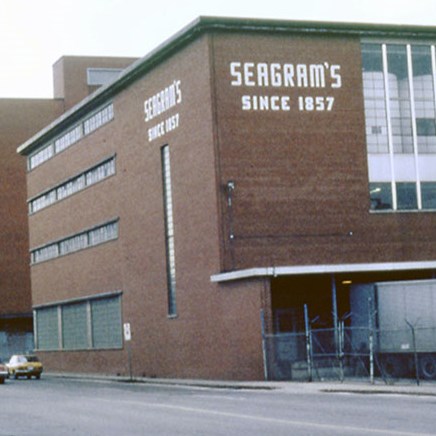
As part of the Seagram distillery’s centennial anniversary, a new state of the art bottling facility opened in June 1957. The three-storey red brick building was the most modern bottling plant in North America when it opened. The third floor held spirit-filled storage tanks and the second floor stored cases used for packaging. The first floor was a bustling hub of employees filling bottles, applying caps and labels, and packing cases for shipping. This 1.5 million dollar addition to the Seagram landscape increased production by 50 percent!

Fill them up! Early Bottling at the Seagram Distillery
The earliest bottling room was in a section attached to the main Stillhouse which stretched along Erb Street and continued down Caroline Street. Since bottling was one of the last steps in the distilling process, it was located at the end of the building. In the early 1900s, the bottling section became the first place to welcome women into the workforce at the distillery. By the 1930s, Seagram was hiring young, single women to work the bottling line. Women proved to be better at completing the delicate handwork of gluing labels and adornments to the bottles.

Women in the Distillery
Louisa Otterbein Riepert and her fellow women co-workers rotated through various jobs on the bottling line. Their tasks included hand tying a black and yellow ribbon to the neck of a Seagram V.O. bottles, applying glue to bottle labels and attaching them, capping bottles, and dressing Crown Royal bottles in their regal purple bag. On average, these women completed 20 to 28 bottles per minute! Women workers were often paid less than men for equal work. Pay raises were given as percentages, making it impossible for women to earn as much as men. Women were often the first to be laid off. Despite this, women enjoyed working at the distillery and were paid well relative to other jobs. Trudy Schneider remembers playing guessing games and singing songs with other women on the line to pass time.

How the New Plant Changed Bottling
The new bottling plants changed the bottling process through automation. Completed bottles went from 20 to 28 per minute pre-automation, to an unbelievable 135 per minute post-automation. Label gluing and bottle capping were now fully automated. Women were still needed to ensure the line ran smoothly, performing quality control checks to ensure labels were straight and filled bottles contained no debris. Now in company uniforms, these women adjusted to a new pace of work on the bottling line, learning how to do their jobs just a little bit faster.

Stop the Line!
With the announcement of the closure of the Waterloo plant, the plant’s long-running operations started to wind down production. Despite its state-of-the-art equipment and hard working staff, the final bottle rolled of the line in 1992. Even with multiple development plans, the building would be torn down and today the land sits quiet as a parking lot for local businesses.
Seagram Cultural Heritage Landscape Today
Looking to the future
Our landscape evolves and changes just as our community does. While this space remains a place of work for many, it is also a place to call home, a place to share a meal, and a place to gather outside. Conserving and adapting our heritage buildings for new uses helps reduce waste and optimize existing resources. It makes our cities more interesting and unique places to live and work, combining echoes of past generations with present generations. What mark will our future generations leave on the Seagram landscape? Stay tuned.