Virtual exhibit
Temperance and Prohibition
Temperance and Prohibition
Prohibition conjures up images of bootleggers, speakeasies, and gun-toting gangsters. As Americans endured prohibition from 1920-1933, Canada had its own unique experience. One humorist argued that here, “nobody even punched anybody in the nose during prohibition.”
The Canadian temperance movement started with early 19th Century reactions to excessive drinking. By the late 1900s, middle-class Protestant women, or "reformers", looked to prohibition as an answer to many social issues. Though some form of local option to turn a municipality dry had been in place by the early 20th Century, it was the First World War environment of sacrifice which fostered broad prohibition laws in Canada. Federal prohibition (in place from March 1918 to December 1919) restricted manufacturing, transportation, and the importation of alcohol. The provinces enacted prohibition with great variation across the nation. Ontario experienced prohibition from 1916 until 1927. In 1927, the Liquor Control Board of Ontario (LCBO) opened, permitting government sale by the bottle.
Because of its brewing and distilling industries, the Town of Waterloo often voiced its dissatisfaction with prohibition. In a 1919 referendum, Kitchener-Waterloo was one of four areas in the province to vote “wet.” Before the 1921 referendum, Waterloo Mayor David Bohlender, told the Chronicle newspaper that he “predicts wet majority,” revealing his town’s opposition to prohibition. Bohlender stated that “crime will be increased, not because of the local liquor industries.” Waterloo industries like Seagram’s Distillery and Kuntz Brewery came of age during prohibition by finding loopholes in the legislation.
Prohibition came to an end in Ontario in 1927 and on June 1, Waterloo residents could buy bottled alcohol at the new LCBO store in Kitchener. The store did “a splendid business all day” as reported in the Globe newspaper.

North American Prohibition Dates
Canada
Prince Edward Island 1901-1948
Nova Scotia 1894-1929
New Brunswick 1917-1927
Quebec 1919-1921
Ontario 1916-1927
Manitoba 1916-1923
Saskatchewan 1915-1925
Alberta 1916-1924
British Columbia 1919-1921
Northwest Territories 1875-1924
United States of America 1920-1933

Timeline
1864: The Dunkin Act or the Canada Temperance Act of 1864 is passed.
1867: Canadian confederation.
1874: The Women’s Christian Temperance Union is formed.
1878: The Scott Act or the Canada Temperance Act of 1878 is passed.
1898: Canada wide referendum on federal prohibition.
1916: The Ontario Temperance Act is passed.
1918 – 1919: Federal prohibition is instated during World War I.
1920: Beginning of prohibition in the United States.
1927: End of prohibition in Ontario. The Liquor Control Board of Ontario (LCBO) is established.
1933: End of prohibition in the United States.
Alcohol and Settlers
In 19th Century Canada alcohol was a central feature of daily life. It was common for families, including young children, to begin their day with a shot of whisky. Settlers had few viable beverage options. Water quality was poor, there was no way to refrigerate milk, and tea and coffee were hard to come by and expensive. Alcohol was widely available and was even given to children as it was considered a healthy drink.
Society gradually became less tolerant of alcohol consumption. There were two main reasons for this. Firstly, there was an increase in the number of factory workers. These workers operated heavy machinery and to do so while intoxicated was a safety hazard. Secondly, employers saw a link between intoxication and lower productivity. Lower productivity meant lower profits and employers did not like this. Alcohol was seen as the root of many social issues including child neglect, domestic violence, and poverty.
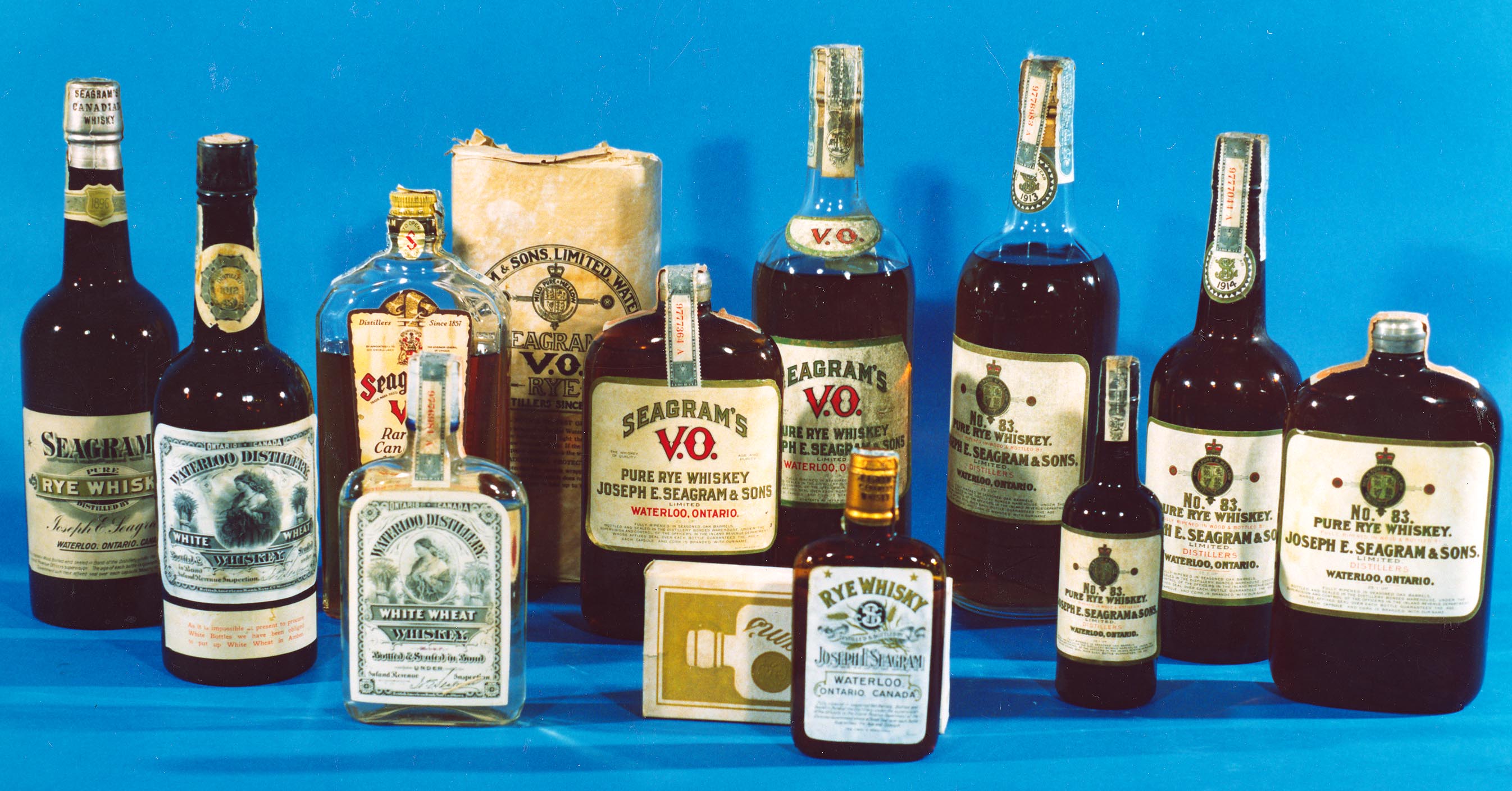
Temperance Groups:
The Women’s Christian Temperance Union
In the 1820s temperance groups began to emerge across North America. These groups aimed to educate the public about the consequences of alcohol consumption. The first Canadian temperance group was founded in 1827 in Montreal and they quickly attracted support. By the year 1843 one in every ten people was a member of a temperance group.
Although the first temperance groups were founded by clergymen, women were strong supporters and advocates of temperance. Women saw first hand the negative effects of alcohol consumption on family life. These groups provided women with their first opportunity to voice their political opinions. Public lectures advocating for temperance gave women the opportunity to develop their political skills. One of the most prominent temperance groups was The Women’s Christian Temperance Union.
The Women’s Christian Temperance Union was the largest nondenominational women’s temperance organization in Canada. It was founded in 1884 by Letitia Youmans, who became its first president, with the goal of countering the evils of alcohol. The group started with 148 members across five unions located in Berlin (Kitchener), Preston, Ayr, and Central Dumfries. By 1914, unions had also been established in Baden, New Hamburg, Elmira, and Linwood. These groups advocated for widespread social reforms including education for children and adults, housing for abandoned women and orphaned children, quality care for the elderly, residences for single working women, and women’s hospitals.
Waterloo Hotels
Waterloo hotels and taverns played an important role in the local story of the temperance movement and prohibition. As early as 1863, the Village of Waterloo passed By-Law No. 48 for the Regulation of Inns, Taverns, Temperance and Victualing Houses (or Restaurants). This By-Law prohibited the sale of “spirituous or fermented liquors” without a license and defined the duties of the Inspector of Licenses. With the enactment of provincial prohibition in September 1916, all licensed establishments in Ontario were forced to close.
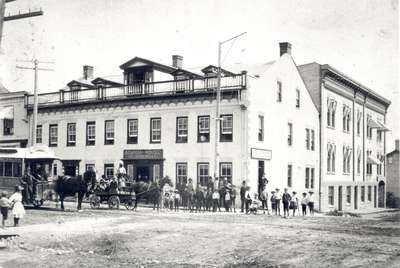

The Bowman Hotel
In 1835, before Waterloo became a village, Henry Bowman built Waterloo’s first hotel at the corner of King and Erb Streets. A fire destroyed the hotel in 1850 and was immediately rebuilt to its original design. In 1880, a two-storey addition was added on the back. Another fire in 1889 destroyed part of the original building and when it was rebuilt, a third-storey was added. The original Farmer’s Hotel was known by many names including The Farmer’s Inn, The Zimmerman House.
In 1920, the hotel was purchased by the Royal Bank. The hotel closed due to prohibition and a section was leased to the Waterloo Men’s Club.
This historic hotel, now the Waterloo Hotel, was designated a City of Waterloo Heritage Landmark in 1990.

The Huether Hotel
The Huether Hotel can be traced back to the British Crown Brewery and Inn (1842) operated by Wilhelm Rebscher. In 1865, Adam Huether purchased the establishment and applied for a tavern license to sell beer. Prominently located on the corner of King and Princess Streets, the hotel and Lion Brewery eventually passed to Christopher Huether Jr., grandson of Adam Heuther. After defaulting on a mortgage payment, the business was auctioned off and purchased by Theresa Kuntz (Kuntz Park Brewery) in 1899. Christopher quickly moved his operation to nearby Berlin (Kitchener) and opened the Berlin Lion Brewery. Under the Kuntz family, the former Lion Brewery became the Waterloo Malting Company and the hotel was renamed the Hotel Ewald (in 1911). By 1929, the brewery became a storage facility for the Kuntz Brewery.
Previously known as the Kent Hotel, it was renamed the Huether Hotel and Lion Brewery in 1987. It was designated a City of Waterloo Heritage Landmark in 1988.

The Alexander House
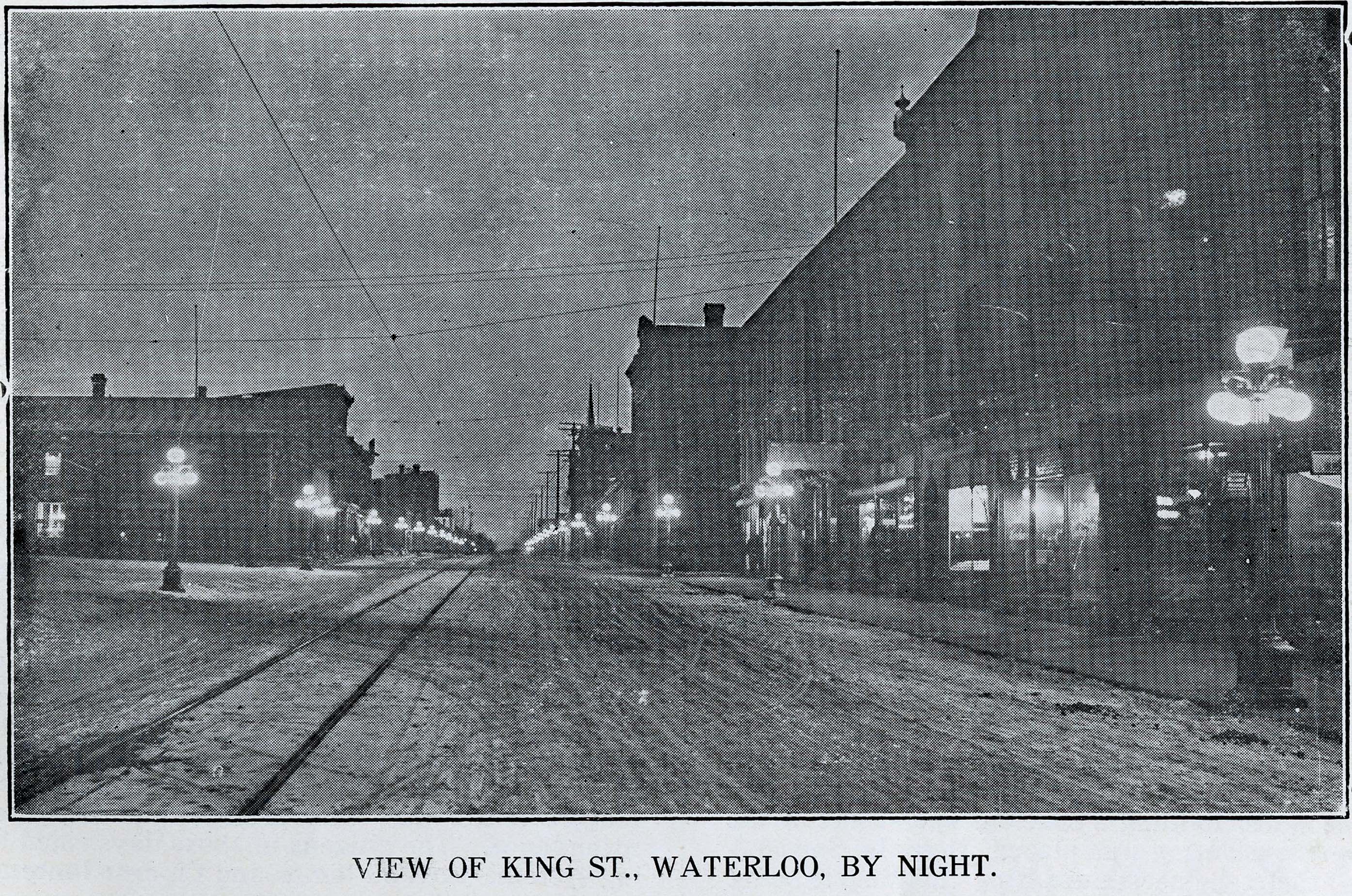
The Alexander House was built by David Kuntz (Kuntz’s Park Breweries) in the 1860s. It stood prominently on the corner of King and William Streets. By the 1870s, it had become one of the most outstanding hotels in Ontario. The large brick building in the right background is the Alexander House hotel.

The Market Hotel
Louis Zoerger built the Albert Hotel around 1860 at the corner of Albert and Dupont Streets across from the then Farmer’s Market. Later known as the Market Hotel and then the Farmer’s Hotel, it provided food, drink and lodging for farmers doing business at the market. Prohibition ended the sale of alcohol at the hotel and the loss of business left Zoerger unable to meet his mortgage payments. He was forced to sell the hotel in 1917. It was purchased by the John Forsyth Company and converted to a clothing factory. The building was designated a City of Waterloo Heritage Landmark in1997.

The Commercial Hotel
Originally known as the Traveller’s Hotel, proprietor John Roos built the Commercial Hotel and stagecoach stop in 1882 at the corner of King and Duke (Dupont) Streets in Waterloo. In the 1870s, it was renamed the Reichert’s Hotel. After a devastating fire, the hotel was rebuilt in 1882 by Jacob Seyler. The establishment became known as The Commercial Hotel and quenched the thirst of many until the 1930s.

The Pfaff Hotel
Located on Albert Street near Central Street, proprietor and tailor George Pfaff ran a hotel in his home beginning in 1859.
Prohibition Legislation
In the late 1800s, the public disapproval of alcohol consumption increased. The Government in Canada began passing legislation to regulate the manufacture and sale of alcohol.
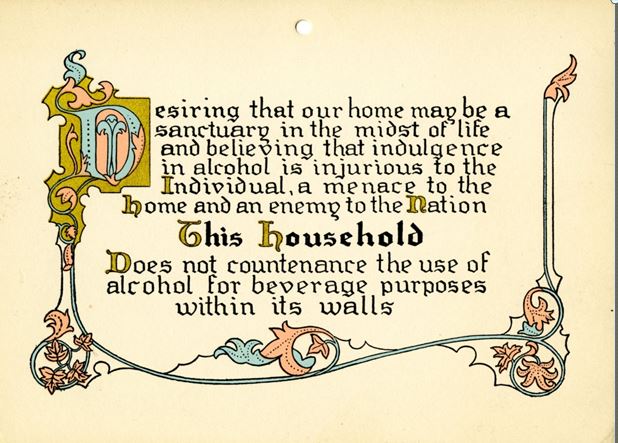

The Dunkin Act, 1864
The Dunkin Act was the first piece of temperance legislation passed in Upper Canada. It provided residents of the Province of Canada (Ontario and Quebec) with the option to prohibit liquor within their community. Thirty qualified electors had to vote in favour for the act to be passed within a community. Attempts to bribe local officials were common, though many communities did pass local prohibition. Local prohibition was not permanent, as communities could hold a second vote which often resulted in its repeal.

The Crooks Act, 1876
In 1876, Ontario passed the Crooks Act which limited the number of licenses granted in each municipality, required all taverns to be well managed eating houses, and enforced a minimum fee for each type of license. There were three types of licenses: wholesale, tavern and shop. A board of three officials was appointed by the government for each city, county or electoral division.
Waterloo Township was divided into North Waterloo and South Waterloo, each with their own board of officials. Within the township, the number of licensed establishments went from 136 taverns and 21 shops in 1874 (with a population of 41,000) to 66 taverns, 7 shops, and 4 clubs in 1914 (with a population of 66,000).

The Canadian Temperance Act (The Scott Act), 1878
The Canada Temperance Act, also known as the Scotts Act, was a federal law that gave communities a local option to prohibit liquor. It was similar to the Dunkin Act. Confederation had transferred prohibition authority to the newly established federal government. It also sought to correct the loopholes found in the Dunkin Act which had been poorly enforced. It prohibited the sale of intoxicating liquor in counties and municipalities that had adopted the act. For the act to be passed, one-quarter of qualified voters had to be in favour of a dry community. While many smaller communities voted for the Canada Temperance Act, larger cities voted against it and continued to allow the sale and consumption of alcohol.
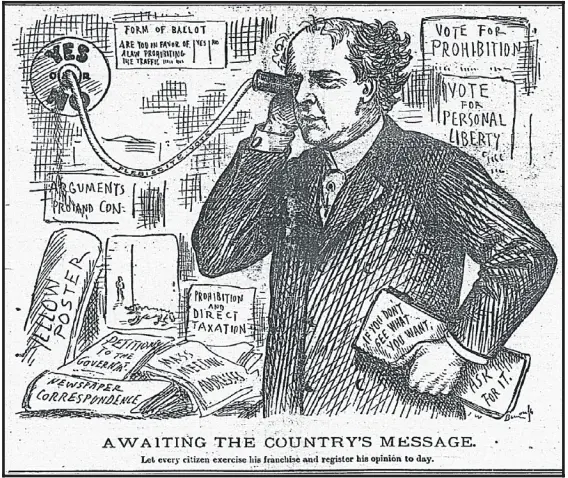
Canadian Prohibition Referendum
In 1898, a national referendum was held by the Canadian Federal Government on the question of nationwide prohibition. Citizens had to vote yes or no in response to the following question: “Are you in favour of the passing of an Act prohibiting the importation, manufacture or sale of spirits, wine, ale, beer, cider, and all other alcoholic liquors for use as beverage?” The results were extremely close with 51% voting in favour and 47% against. However, there were stark differences in citizen’s responses regionally. For example, in Quebec, only 19% voted in favour while in the Maritimes 80% voted in favour. Ontario was somewhere in between with 57% of voters in favour of national prohibition. Due to the wide regional disparities and low voter turnout (44%), the federal government decided not to enact nationwide prohibition. They argued that since less than one-quarter of the population (51% of 44%) had voted in favour of national prohibition, there was not enough support for such serious legislation to be passed.

The Ontario Temperance Act
The Ontario Temperance Act was passed in September 1916 bringing prohibition to the Province of Ontario. This act only outlawed the sale of beverage alcohol, not its manufacture or distribution. Distilleries could legally remain open as they were under federal not provincial jurisdiction.

All Quiet at the Distillery
The Chronicle-Telegraph of Waterloo, July 21, 1921
Nothing like Saturday’s frenzied haste and excitement prevailed last evening at the Seagram distillery in Waterloo. Up to about 9 o’clock a good sized crowd had collected and numerous automobiles drove up and down the road looking for something to happen. With the first drops of the threatening storm, however, the crowd dispersed and did not again gather.
Fewer and fewer cars went to the distillery grounds to be loaded as the evening wore on. Once or twice a horse and buggy drove in and along about 10.30 two or three cases were seen being carried on the shoulders of local citizens to their homes. By 11 o’clock only a few small orders remained to be filled, most people preferring to take no chances on late delivery.
Even the inspectors, who kept so close a watch on Saturday and earlier in the day Monday left about 10 o’clock.
At 12 o’clock the curtain was rung down on King Alcohol’s sojourn in Ontario. With midnight both the Ontario Temperance Act and the Doherty amendments to the Canada Temperance Act came into force. Today heavy penalties are imposed on anyone attempting to bring liquor into the province.
Waterloo on Monday went into a state of excitement and expectancy similar to that in an armed camp when some big manoeuvres are “in the wind.”
Every strange car that stops along the streets and every stranger who wanders leisurely about is given the “once over” by the citizens, who immediately begin to form an opinion as to whether a so-called bootlegger has arrived to take on a cargo.
The province goes dry at midnight tonight.
Northing but “whiskey-running,” “liquor shipments” and Saturday’s shooting affair are talked of in the business places and on the streets.

Centre of Attraction
For several days the Seagram distillery has been the centre of attraction in the town, attracting to it not only the interest of the townspeople but bringing in cars and men from many parts of the province, all anxious to get their cargoes of liquor away while there is still time.
License inspectors and extra government officers are there, too, and have made a steady patrol of that section of the town day and right since the latter part of last week.
While the bulk of the shipments going out are said to be perfectly within the law and are only being conveyed by motor because they were too late to be handled by the express companies who closed down on all receipts at midnight of Friday last, it is thought by the officers that there are men taking out shipments who are not complying with the law and a careful watch is being kept to see that they do not get away.
It was an effort to stop a suspected car on Saturday afternoon that led to the alleged shooting incident which has resulted in summons being issued for inspectors E. Zinkann and Connors to appear in the Waterloo Police Court Wednesday afternoon.
It is said that a car came out of the distillery grounds on to Erb street and when the driver refused to stop when so ordered by the officers, it is alleged that the officers mentioned fired at the tires of the car, regardless of the fact that there were in the neighbourhood of probably one hundred persons standing around watching the “fun.”
The shots first at the tires missed and the car got away from the officers. Several other cars are said to have made getaways, following ruses such as sending out decoy trucks loaded with empty cases. In a number of incidents the officers have given chase and overhauled the trucks. In one instance the truck leaving the yards was closely followed by a large touring car which stayed between the truck and the officers car which followed, so impeding the progress of the latter that the truck managed to dodge the pursuers and get away.
World War I
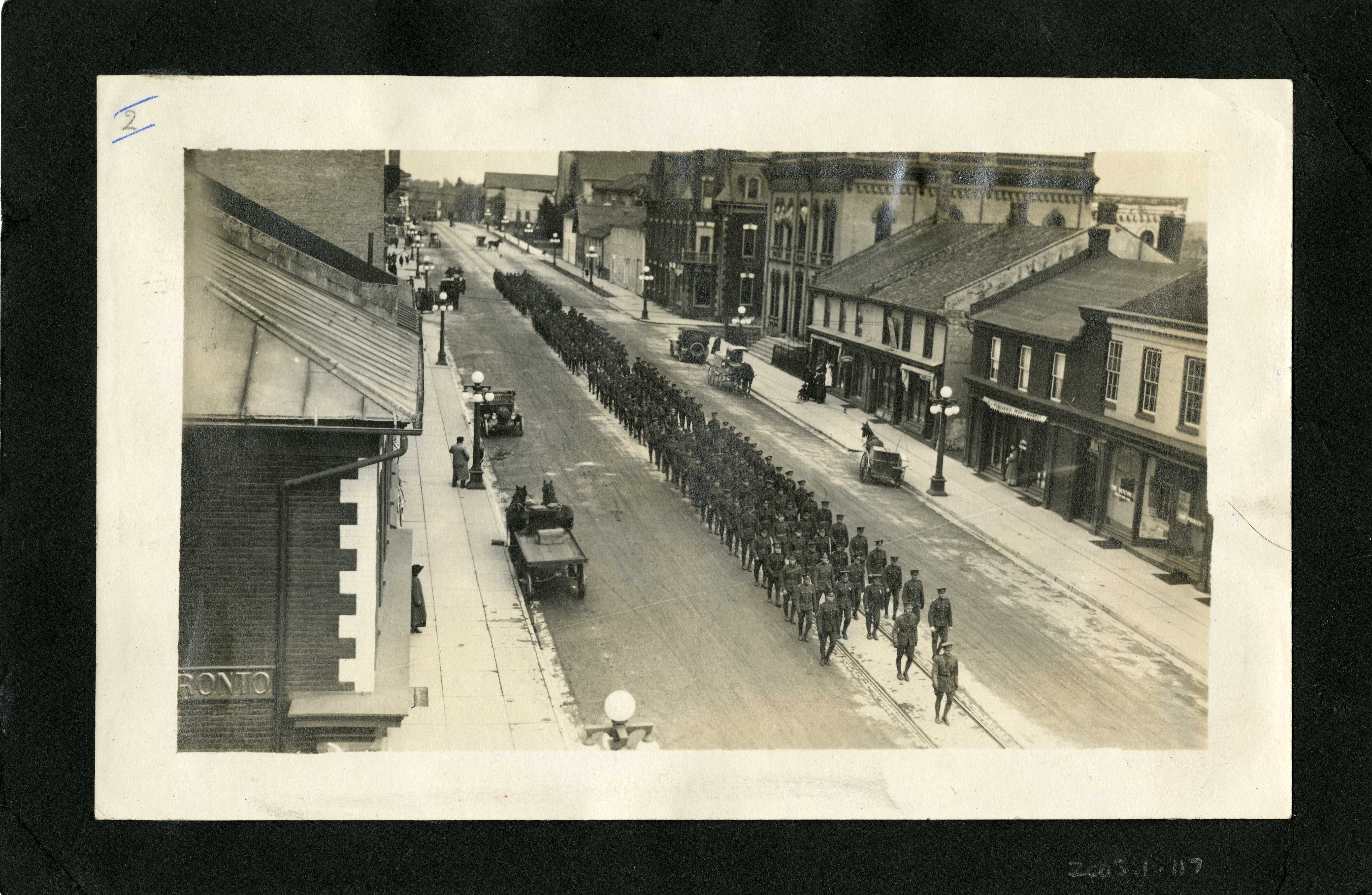
Over the course of the war, alcohol production was viewed as a waste of resources and manpower. On March 11, 1918 the Canadian Government passed the War Measures Act, enacting federal prohibition as a temporary war measure. This act prevented the importation, manufacture, distribution or sale of alcohol for the duration of the war and for one year afterward. Additionally, it prohibited the use of foodstuffs for alcohol production, increased restriction on interprovincial liquor trade and importation into the country. Under this legislation, intoxicating liquor was defined as any liquor containing 2.5 percent proof spirit or more which was in line with provincial definitions. However, it permitted the manufacture, use and sale of alcohol for sacramental, medicinal, scientific and manufacturing purposes as long as beverage alcohol was not being produced.
At the end of 1919, when federal prohibition ended, the government required each province that wished to continue prohibition to hold a plebiscite. All provinces with the exception of Quebec, voted to continue provincial prohibition. In Ontario, 772,041 voted in favour while 365,365 were against the continuation of the Ontario Temperance Act.
Prohibition in Waterloo
Support (or Lack Thereof) for Prohibition in Waterloo
Within Ontario, Waterloo was one of only three counties that rejected prohibition in the 1893 plebiscite. North Waterloo was especially opposed to prohibition. Despite a provincial plebiscite in 1919 resulting in the continuation of Ontario prohibition, many citizens of North Waterloo ignored it. Between 1923 and 1924, liquor inspectors issued over $32,000 in fines for violations in Waterloo. Toronto and Hamilton were the only cities to receive more fines than Waterloo. Subsequent referendums were held to determine if the Ontario Temperance Act should continue to be enforced.

Mayor Predicts Wet Majority in Waterloo, April 18
The Chronicle-Telegraph of Waterloo, April 7, 1921
Mayor Bohlender declared this morning that in his opinion the Referendum will be snowed under in Waterloo. He asserted that the local citizens are opposed to the Referendum on general principles and not because of the local liquor industries.
Mayor Bohlender stated that because 5% of the people are thieves he does not think it plausible that the other 95% should be locked up and he consider the liquor question as parallel to this.
Mayor Bohlender declared that he is opposed to intemperance but that in his estimation the Referendum will not remedy the matter, the homes of the wealthy will be full of liquor, he declared, and crime will be increased.
The Referendum will not make a dry Ontario, but a moonshiner’s Ontario, he continued.
He declared that he would substitute the lash for the drunkard of a prison sentence. In his estimation this would remove drunkenness and leave intoxicants for those of moderate habits who desire them.

Ontario Votes for Retention of O.T.A by 40,000 Majority. North Waterloo Decisively in Favor of Government Control
The Chronicle-Telegraph of Waterloo, October 30, 1924
“In the riding of North Waterloo, as was anticipated, the vote was decisively in favor of Government Control, the majority against the continuance of the O.T.A. being nearly 6,000. The municipalities of Kitchener and Waterloo largely contributed to the vote polled against the O.T.A., the ‘Wet’ majority in Kitchener being 3,488 and in Waterloo 1,414.”

Evasion and Defiance
In the end, prohibition did little to stop the sale or drinking of alcohol in Waterloo’s hotels and taverns. Loopholes were found and exploited in all prohibition legislation making it fairly easy to find an alcoholic beverage even within ‘dry’ communities.
In his memoirs, Mennonite Allan Buehler describes the secretive drinking in Waterloo’s hotels and taverns during prohibition:
“All through these prohibition days the hotels had bars and were bootlegging. They only kept one bottle of whiskey on the bar at one time. The rest was well hidden, and they had one man who would bring a fresh bottle from this hiding place when needed. Behind they had a square shoot, about 12 inches square. This shoot went down to below the cellar floor into a hole, and in this hole they had sharp stones. There was a tap where they could let water run down this shoot. Everyone wanting a drink would have to stand close to the bard. They had two heavy doors that were locked from the inside leading into the bar, and a watchman between these doors. The watchman had a peep hole where he could see who wanted to get in. If the watchman recognized you, he would let you in, and if he did not recognize you, then you had to get someone you know to vouch for you before he would let you in. The Police made regular raids on these bars and they were rough. They would run into the hotel with axes and started smashing the doors down to get in. As soon as the watchman saw them coming he would sound the alarm. The bartender would throw the bottle of whiskey down the shoot and all the customers would have to throw their glasses down the shoot, and they would turn on the water to wash away the whiskey. Before the police could lay a charge, they were required to obtain at least one ounce of whiskey. By the time the Police had smashed the doors down, all the whiskey was smashed on the stones at the bottom of the shoot, and water had been turned on to wash the whiskey away.”
The text here is reprinted as it appears in The Pennsylvania German Dialect and the Life of An Old Order Mennonite, by Allan M. Buehler, 1977.

Charged with Violation of Temperance Act
The Chronicle Telegraph of Waterloo, January 2, 1919
“Mr. A Reinhart of the Alexander House appeared before Police Magistrate Weir on Friday afternoon charged with selling beer testing over 2 ½ percent. License inspector Joseph Winterhalt stated that five samples were taken and analysis from five kegs showed a percentage of less than two percent and one of 1 ¼ percent. Mr. Carl Huether of the Lion Brewery in giving evidence stated that all beer is tested before being shipped and (?) sold which tests over two percent. Magistrate Weir reserved judgment for one week.”

Speakeasies
Speakeasies or blind pigs also became widespread. These drinking rooms were located in backrooms and basements where customers were served watered-down liquor. The majority of people who visited these drinking rooms were ordinary people looking to socialize, while others got a thrill by evading law enforcement. Drinking rooms became the first place where it was acceptable for women to be seen consuming alcohol in public.
Those who could not find their fix elsewhere made their own alcohol. This was done by fermenting corn, potatoes, and other crops to make moonshine. Others who were truly desperate resorted to drinking hair tonic or shoe polish, which could cause blindness and even death.
American Prohibition
Residents of the United States experienced stricter prohibition laws than Canadians.
The United States experienced federal prohibition from 1920 to 1933 during which time the manufacture, sale, import or export of alcoholic beverages was illegal. Prohibition laws in Canada allowed licensed distillers and brewers to export their products. This put Canadians in an advantageous position to make profits from the dry American market. During the first year of American prohibition, Canada’s export tax revenue for alcohol jumped from 5 million dollars to 23 million dollars.
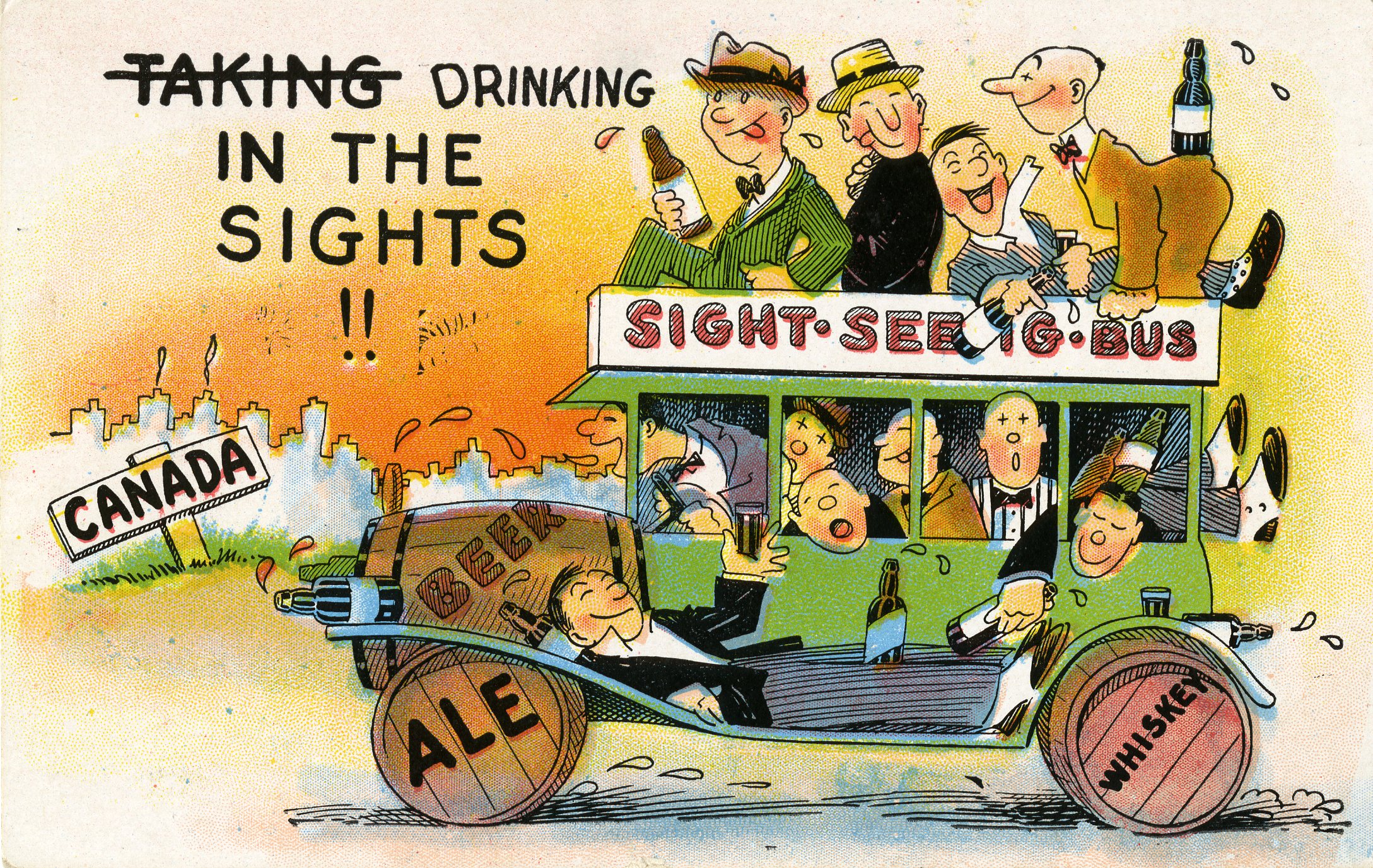
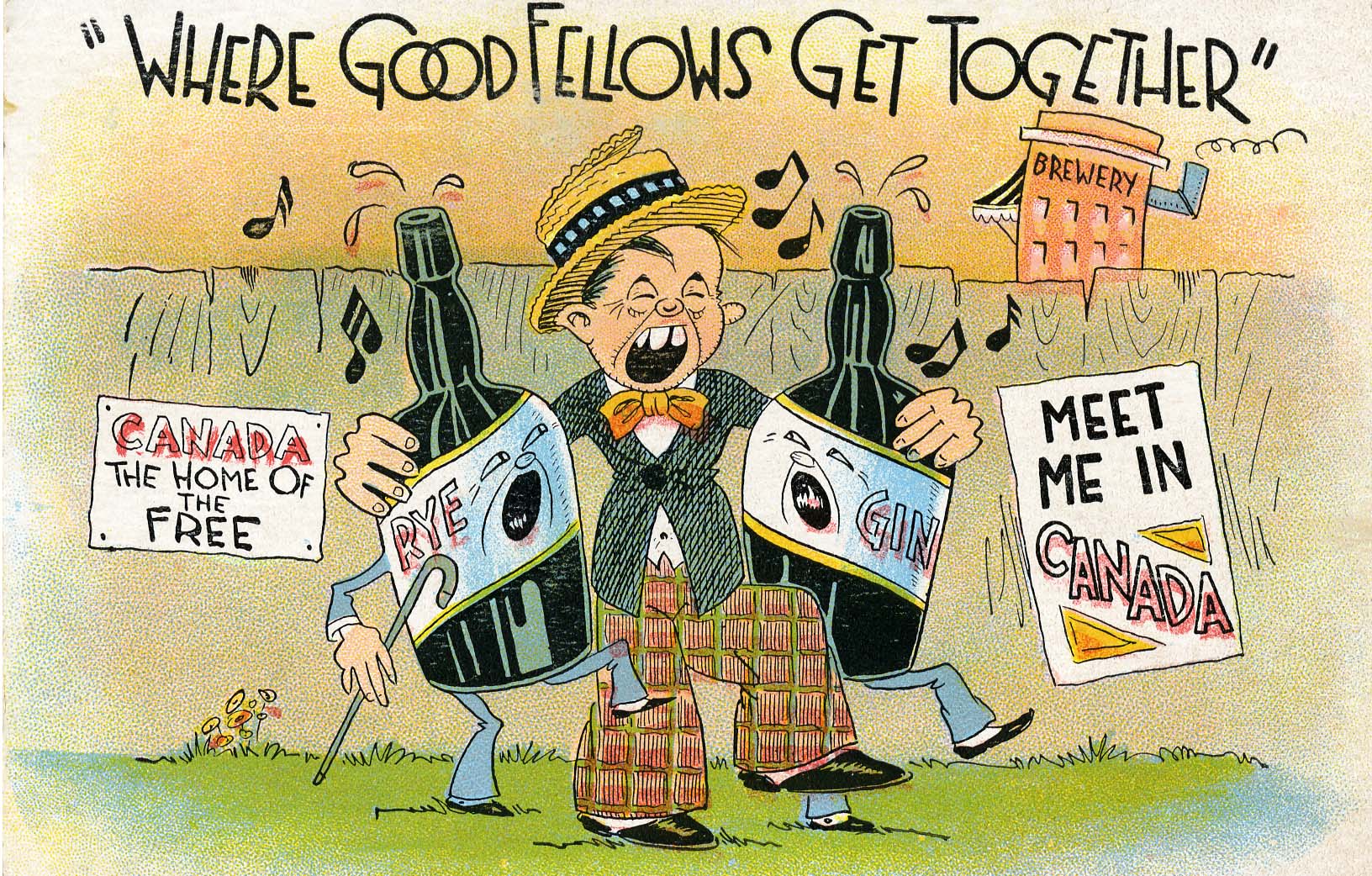
During American prohibition, souvenir postcards were distributed depicting Canada as the barroom of the United States. These postcards were strongly disliked by Canadian temperance groups.

Prohibition Packaging
In 1927, a new triangular bottle shape was introduced by the Ontario government to replace the previous flask style. This bottle was designed to make the concealment of alcohol more difficult during prohibition.

Prohibition Packaging
In this same period, Bronfman’s Distillers Corporation – Seagrams Limited introduced a new brand of canned whiskey. It was considered an unbreakable, enclosing a glass bottle within a can. These bottles were used during the height of American prohibition between 1929 and 1934. This unique style of packaging was supposed to reduce bottle breakage of alcohol being smuggled into the United States via mail, boat and car.

Bootleggers and the Waterloo Garage
At the Huether Hotel, a hidden underground tavern was discovered in 1961 and later excavated in the 1980s. Tunnels beginning in the caverns appear to lead behind the building and possibly under the street. Some believe these tunnels are left over from the Huether’s rum-running days during prohibition, connecting the hotel to the Seagram house on Albert Street.
The Sehl and Heppler Garage on King Street across from the Huether Hotel played a key role in the Waterloo’s bootlegging stories. During the construction of McMullan’s Canadian Pub & Grill (now Stark & Perri) on King Street, the owner found evidence of an existing tunnel under King Street heading in the direction of the hotel. During prohibition, the Sehl and Heppler Garage was allegedly the local headquarters for bootleggers belonging to the Al Capone gang.

In his memoir, The Pennsylvania German Dialect and the Life of an Old Order Mennonite Allan M. Buehler recounts his experience with bootleggers in Waterloo.
“At this time I purchased from Levi Bowman Jr, his property on the Heidelberg road. It had a large house, a barn and 9 acres of good garden land. Levi Jr. had the sawmill, but it had burned down, so he wanted to sell the property and move to Elmira. This was an ideal market gardening place, and had many apple, cherry and mulberry trees, a large asparagus patch and rhubarb, and we planted about an acre of strawberries. That winter Heppler and Sehl Garage on King St. in Waterloo send word that they wanted to see me. They knew me well, as I used to do a lot of work for them when I had the welding shop. They were right across the road from what was the Huether Hotel, and I think it is now called the Kent Hotel. The garage was red brick two storied building, and lately has been occupied by an advertising agency. The top floor was office and for overnight car storage. The lower floor was garage work shop. My job was as night operator, selling gas and looking after car storage. I did not know what all was involved in this job.
Those were the days of prohibition, and bootlegging was big business. Especially in Waterloo because Seagram’s Distillery was located here. Bootleggers from Windsor and Detroit made a section of Heppler and Sehl downstairs into their headquarters. This was a branch of the Al Capone gang, and Mr. Yarrow was the head of this branch. They kept 4 Reo trucks on the ready downstairs. Mr. Yarrow drove a large Cadillac car with bullet proof glass. They were large wholesale bootleggers and did not sell locally. Bootleggers from all over Ontario came here for their supplies, and always at night. These were no petty bootleggers, but professional gangsters, and they all carried revolvers. They had “spotters,” at various locations in town who watched and reported to them the location of the Provincial Police. It was illegal to sell or have liquor in your possession in Ontario, but it was not illegal to export liquor to a foreign country. When they decided they were not being watched by the Provincial Police, they would make out regular export papers for a load of Seagram’s whiskey. They would then go to Seagram’s Distillery after mid-night, present the export papers and load up. They would then drive along the back streets of Waterloo, never using the same route, and would head for Elmira. They had a warehouse some place about Elmira in the sand hills where they would hide the whiskey, and return back to the garage. They would usually be able to evade the police, but occasionally they were spotted, and the police gave chase. They would try to out race the police, but if they were caught, they would show their export papers and would drive to Toronto or Hamilton and actually export that load, and there was nothing the police could do about it, because exporting was legal. When they came back I saw bullet holes in the back and sides of the truck where police had tried to stop them.
They now had a good supply hidden away up in their Elmira warehouse and were ready for business. Bootleggers from Toronto, Hamilton, Windsor and from all over Ontario would phone in and using a “code” would place an order. Soon after midnight a truck with two men would leave and go to Elmira to pick up this order. The rest of the gang would stay in their office downstairs, waiting for the customer to arrive. They would be playing poker while they waited for the truck to return. I saw them playing, and it was for high stakes with lots of money on the table and their revolvers beside them. Sometimes I had to answer the phone and would be given a message in code, such as: “Tony is interested in 60 bushels of corn tonight.” I would give them the message, and they would go to Elmira to pick up whatever “60 bushels of corn” meant. These bootleg customers would usually drive big Cadillac cars, and I would have to let them in. They would always drive in and turn around so the car is facing out for a quick getaway.
While they waited for the truck to come back from Elmira with the whiskey, they would pay for it and be ready to slip out quick before the police could catch them. The whiskey was all in bags, and when the truck from Elmira drove up I had to have the doors open fast. They would drive in, transfer they bags of whiskey into the customers car, and he would speed out fast. It did not take more than 2 minutes to transfer the whiskey.
I myself was not involved in any transactions, all I had to do was to open and close the doors, but I sure knew what was going on, and should not have taken any part of such transactions. Mr. Yarrow, the boss came up from Windsor once in a while to check on his operations. He would park his big Cadillac upstairs and would sleep in the hotel across the road. He would ask me to wash his car overnight, and gave me his hotel room number, and I was to come and wake him up at 5 a.m. in the morning. He always gave me a $10.00 tip, and that was a big tip in those days.”

Seagram’s Distillery
Prohibition was not easy on Waterloo’s Seagram’s Distillery. President Edward F. Seagram faced an entirely different business climate than his father, the founder of the company, Joseph Seagram. Making liquor was still legal, but Seagram struggled because the family did not want its whisky to end up in the hands of bootleggers. During federal prohibition from 1918 to 1919, Seagram’s shifted to the production of industrial alcohol.
In 1928, brothers Samuel and Harry Bronfman purchased the Joseph E. Seagram & Sons Distillery. While Edward F. Seagram agreed to stay on as president of the company the family felt the distilling industry “was becoming an unsavoury business.”
“The distillery was selling the liquor to the proper channels, which I understand was outside Canada. That’s when the bootleggers got hold of it. He (Edward F.) did not want to be in the business with all the bootlegging going on, outside his hands.”
-Edward Seagram, son of Edward F. Seagram, 2000

The Seagram family had already turned its small distillery into a major exporter with well-known brand names. After the Bronfman family purchased the distillery, the name was changed to Distillers Corporation - Seagrams Limited and made a public company.
Prohibition was sweeping North America, but the Bronfman’s liquor business grew quickly. The family found loopholes in each incarnation of the prohibition laws, including legal sales of liquor for “medicinal” purposes, and mail order. The addition of the Seagram distillery with its well-known labels and export links – not to mention closer proximity to the Detroit and Niagara Rivers – only added to their profits.
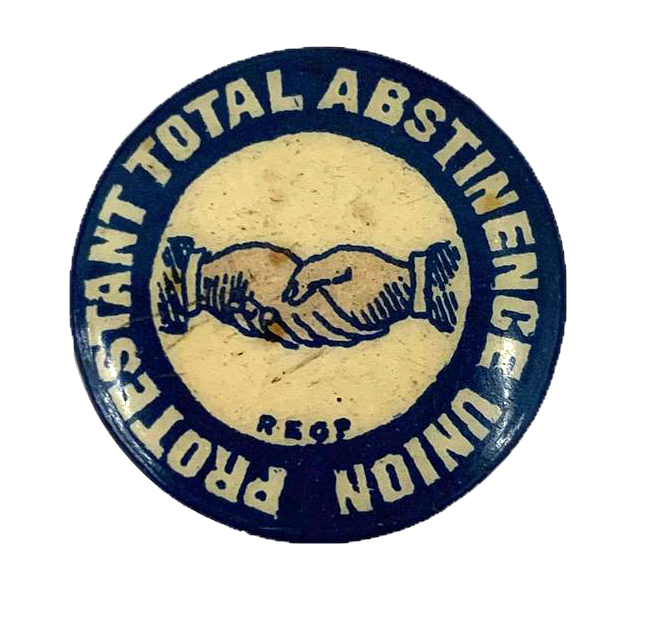
The Seagram Company had a steady market for its products both in Canada and in the US. Popular brands such as “V.O.” and Seagram’s “83” were selling well across the border, while other rye whiskies such as the White Wheat and Seagram’s Pure Malt Whisky were enjoyed in Canada. The Bronfmans’ brought about change to the standard Seagram products through clever marketing and packaging campaigns. The addition of the VO ribbon to the bottle and the introduction of the Crown Royal brand with its distinctive bottle design were just some of the examples of what was to come.
Years later, Sam Bronfman would feign innocence, even while admitting that his fortune was built on breaking American laws.
“We loaded carloads of goods, got our cash and shipped it. Of course, we knew where it went, but we had no legal proof. And I never went on the other side of the border to count the empty Seagram’s bottles. You people were thirsty.” - Samuel Bronfman, 1960s.
Samuel was convinced that US prohibition would not last long, so he upgraded his two distilleries and began to stock pile spirits. By the time prohibition ended in the US in 1933, he had the world’s largest supply of rye and sour-mash whiskies ready to flood the American market.

Kuntz Brewery “The Beer That Made Waterloo Famous”
Founded in 1844, the Kuntz Brewery began in Waterloo on the corner of King and Princess Streets. By the mid-1860s, the brewery was relocated to King and William Streets and renamed the Spring Brewery. By the 1870s, the brewery was known as the L. Kuntz Park Brewery. Within forty years, the company had become Ontario’s second-largest brewery, selling 90,000 barrels of beer a year. The brewery’s profitability began to decline after the death of owner David Kuntz Jr.

Kuntz Brewery “The Beer That Made Waterloo Famous”
War legislation and prohibition further added to the brewery’s difficulties. Prohibition forced the brewery to switch to export sales of legalized 2 ½ percent beer and the manufacture of “soft” drinks that contained no alcohol. As prohibition came to an end in 1927, sales were steadily increasing for the brewery. The onset of the Great Depression was a fatal blow to Kuntz Park Brewery. In September 1929, the Attorney General of Canada won a Sales and Gallonage tax suit for $200,000 against the company for its bootlegging revenues gained during prohibition. One month later, the company was sold to E.P. Taylor [link to E.P. Taylor’s wiki bio page] and Canadian Breweries Limited in return for stock and payment of the tax suit. The brewery became known as the Carling-Kuntz Brewery.

Soft Drinks
Kuntz’s line of soft drinks was created as a replacement to alcohol or hard beverages. Many of the soft drink names contained references to alcoholic beverages, such as ginger ale, root beer and vino.
Medicinal Alcohol
Under the Ontario Temperance Act, taverns and bars were legally forced to close. Druggists and licensed vendors were permitted to sell liquor only for medicinal, sacramental, industrial, and scientific purposes.
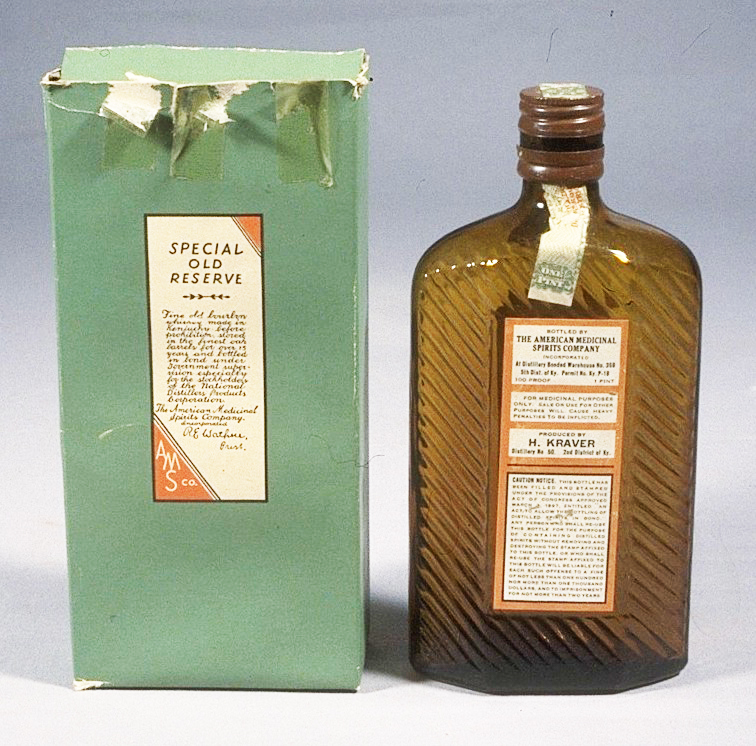

Distillers across North America continued to legally manufacture alcohol during prohibition by simply applying medicinal-looking labels in place of regular brand labels. The alcohol in these bottles was often the exact same blend companies had been distilling and bottling before prohibition.

Ontario Government Dispensaries
In 1919, seven licensed Government Dispensary stores across Ontario (Hamilton, London, Windsor, Kingston, Ottawa and two in Toronto) controlled liquor sales. Buying liquor in these stores was similar to buying prescription medicine from a pharmacist. All purchases were recorded. No bottles were on display in the stores and the plain, unadorned labels on the bottles resembled the labels on medicine bottles. Doctors’ prescriptions for liquor were limited to 10-ounces at one time, but under the Temperance Act, a maximum of 30 prescriptions a month could be issued to an individual. These dispensaries provided a lucrative outlet for illegal liquor that had been confiscated and redistilled to ensure quality.

Ontario Government Dispensaries
From 1920 – 1921 588,000 prescriptions for medicinal liquor were issued in Ontario. Then from 1923 – 1924 810,000 prescriptions were issued.
The Ontario Government Dispensaries were the forerunners of the government controlled Liquor Control Board of Ontario (LCBO).

Over 1,000,000 Quarts of Liquor Sold Under Physician’s Orders Since O.T.C. Came into Force
The Chronicle-Telegraph of Waterloo, April 10, 1919
Inquiry Brings Out Some Interesting Facts in Connection With Enforcement of Ontario Temperance Act; Flavell Claims Much Less Liquor Consumed
Orders for ever one million quarts of liquor were issued by physicians under the O.T.A. up to the end of February of this year according to an estimate furnished by the Public Accounts committee of the legislature.

Snyder’s Druggist
If you did not live near an Ontario Government Dispensary, medicinal alcohol could be legally purchased from the town’s local druggists. Druggists could sell six-ounces at time to fill a doctor’s prescription. They were also required to keep records of the purchasers, as well as the amount and type of sales. In Waterloo, Snyders Druggist and A.G. Haehnel Drug Store supplied citizens with their legal alcohol “fix” during prohibition.
Liquor Control Board of Ontario
The Liquor Control Act was passed in May 1927 which signaled the end of prohibition in Ontario and led to the introduction of a new government-regulated system.
The duties of the new Liquor Control Board of Ontario included: “To establish and run liquor stores and warehouses; to buy, import and sell liquor; to control prices and to grant, refuse or cancel permits to buy liquor.” Under this act native wines were sold by their producers, but distillers and brewers were required to sell to the board. Two months later, Ontario opened sixteen new liquor stores. Within the first few hours of the store opening, customers spent an estimated $12,840 on beverage alcohol. Over the next six months, eighty-six stores and three mail-order departments were opened across Ontario.
For the first time in eleven years, Waterloo residents were able to legally buy alcohol in neighbouring Kitchener. Waterloo Town Council began the process of creating a new By-Law in July 1927, allowing for the enforcement of the Liquor Control Act of Ontario in Waterloo. To enforce the provisions under the Act, Waterloo appointed Reuben Clarke as its Chief Constable of the Town. By 1928, the Liquor Control Board of Ontario (LCBO) had opened store #115 at 43 King Street North in the Kraft Block between Princess and Duke (Dupont) Streets in Waterloo.

License and Registration
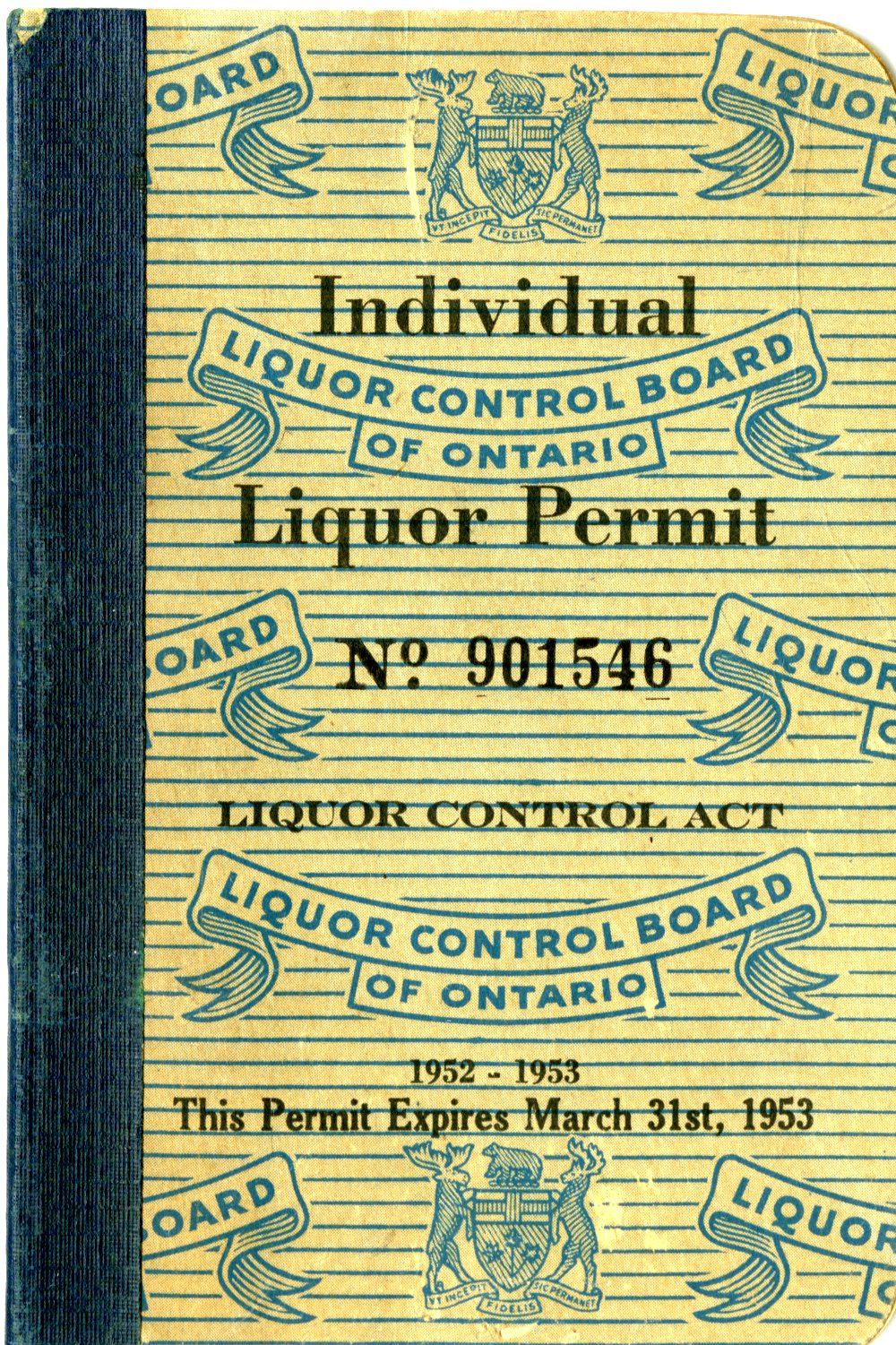
The LCBO introduced new regulations about the consumption and sale of alcohol. Between 1927 and 1962, anyone wanting to drink alcoholic beverages in Ontario had to buy a yearly permit at the cost of two dollars. The permit included personal information and a section to record all alcoholic purchases. The maximum quantity a permit holder could buy at one time was no more than one case of liquor or wine, or two cases of beer. The LCBO kept records on every licensed drinker, every sale made, every drinking establishment, every employee and every bottle of alcohol in Ontario. In 1944, the LCBO introduced IBM punch cards to track consumption in a more efficient manner.
A person’s permit could be cancelled at any time if the LCBO decided they were purchasing alcohol too often, or if individuals were publicly drunk, or morally questionable. Individuals whose permits were taken away were placed on the Interdiction List. Complete lists were sent out on a weekly basis to all LCBO stores, police stations, breweries, and liquor selling establishments where staff had to review the lists. The LCBO listed over 79,000 individuals on its Interdiction List between 1927 and 1975.

LCBO Timeline
1927: The Liquor Control Act ends prohibition in Ontario and establishes the Liquor Control Board of Ontario.
1935: Wineries are allowed to operate one retail wine store off premise.
1944: The Liquor Authority Control Board is established to license beverage rooms to serve beer and wine.
1947: The Liquor License Board of Ontario replaces the Liquor Control Authority Board. It is established to license bars to sell liquor by the glass.
1961: Permits for buying liquor are abolished 34 years after their introduction.
1969: The LCBO opens its first self-serve store in Weston.
1971: The sale of 40 ounce bottles is permitted.